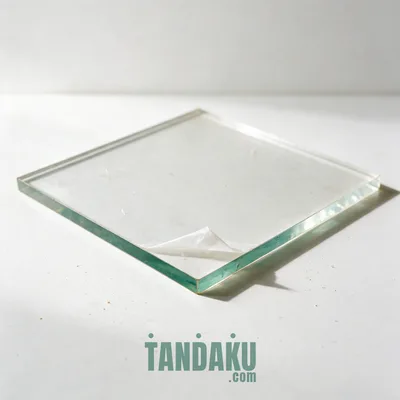
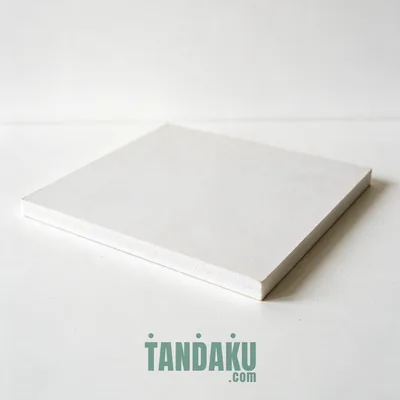
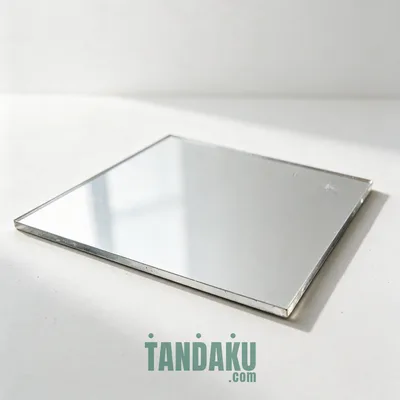
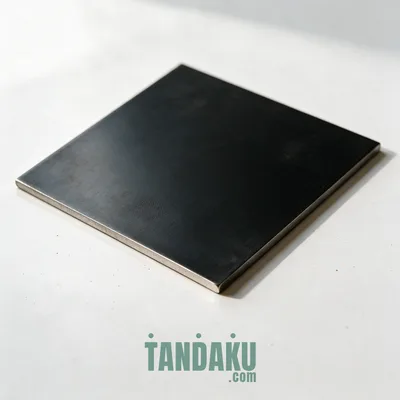


A 3D signboard is a sign whose letters stand out from the wall instead of being printed flat, and the letters are what you pay for. At Tandaku a line of lettering 100 cm wide and 20 cm tall costs RM55 in 5 mm PVC foam, RM93 in 3 mm acrylic, RM250 as unlit aluminium box-up letters and RM500 as lit aluminium box-up letters. Every letter range takes 7 working days. This guide covers the letter types, where each one suits, and what each costs at two sizes.
What "3D signage" actually means
The term covers any sign where the lettering stands proud of the background. There are three builds:
- Flat-cut letters — solid letters cut from a sheet of PVC foam, acrylic, wood or metal. The depth is the thickness of the sheet, and there is no light inside.
- Box-up letters — hollow metal letters with a side wall (the return) and a face. Being hollow, they can take LED inside, which is where lit shopfront letters come from.
- 3D-printed letters — printed layer by layer in PLA or PETG, for detailed shapes that are hard to cut from a flat sheet.
A printed board with a drop-shadow effect in the artwork is not a 3D sign. It is a flat board.
We sell the letters themselves, priced online. Enter the overall width and height of your lettering on the Sign Letters page and the price shows at once.
The letter types, compared
| Letter type | How it looks | Lit? | Where it suits |
|---|---|---|---|
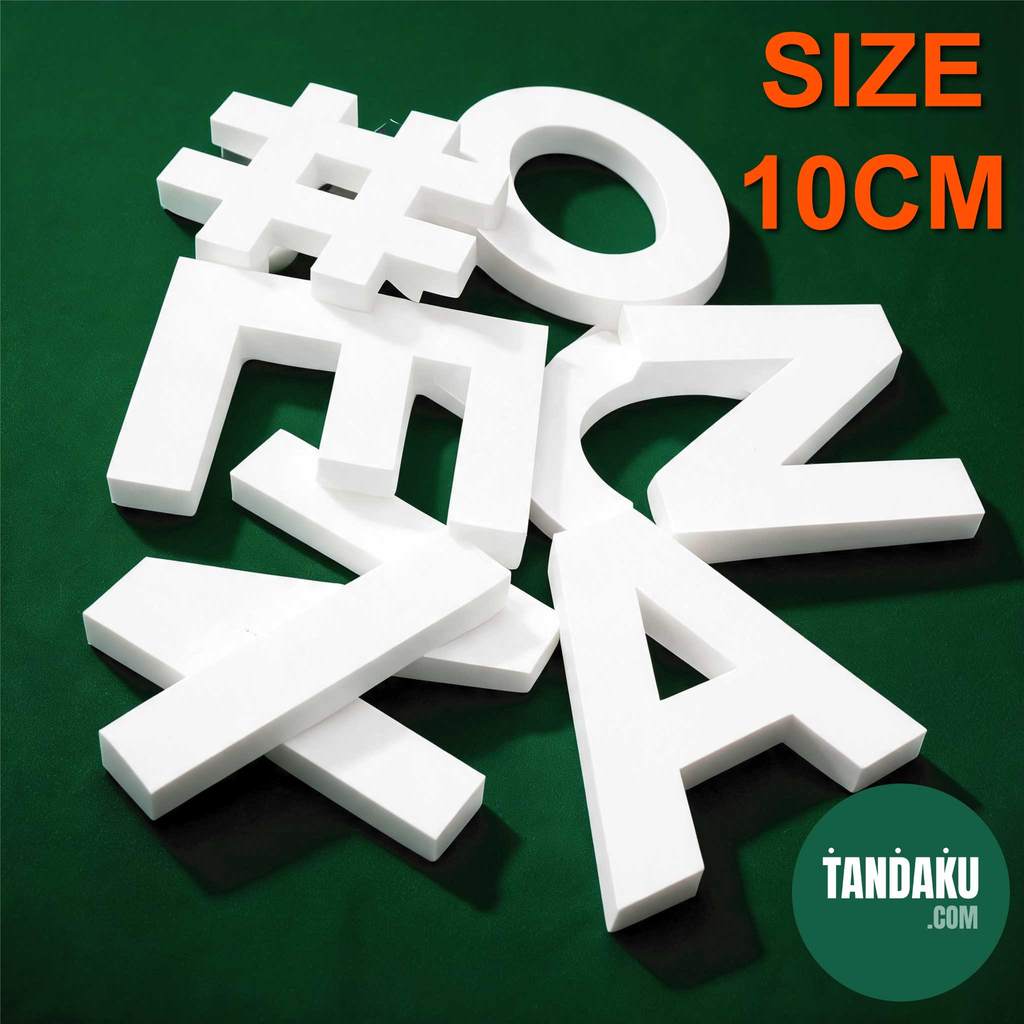
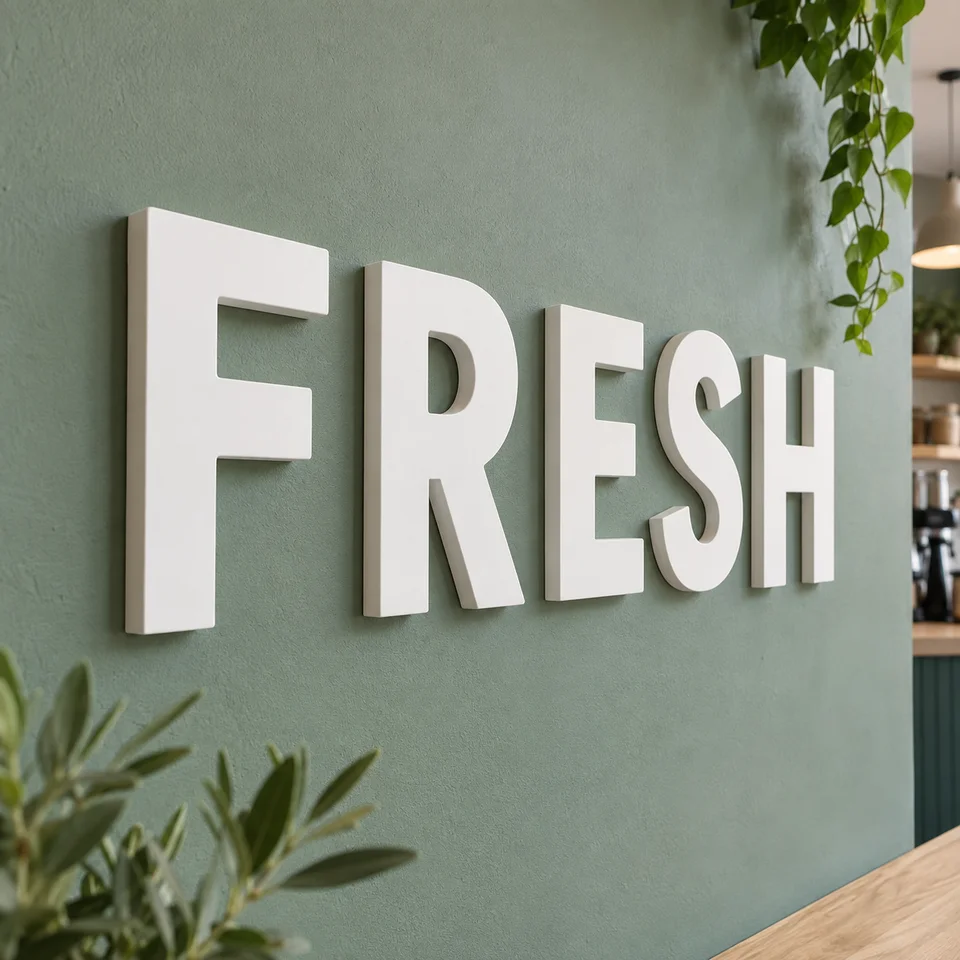
| PVC foam, 5 to 25 mm | White or black. A thicker sheet throws a deeper shadow | No | Office and clinic receptions, events, a business name on a budget |
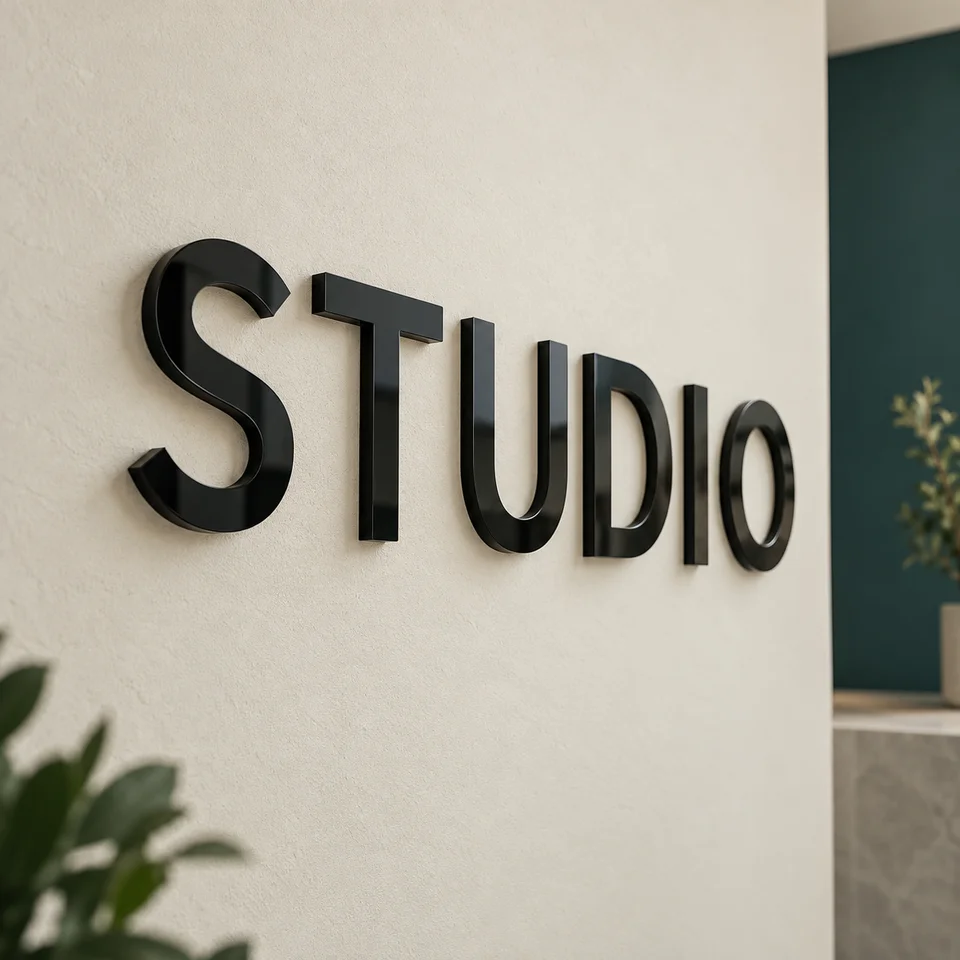
| Acrylic, 2 to 10 mm | Gloss, matte, frosted, tinted or mirror, with polished edges | No | Receptions, boutiques, salons and retail walls. Mirror acrylic stays indoors or sheltered |
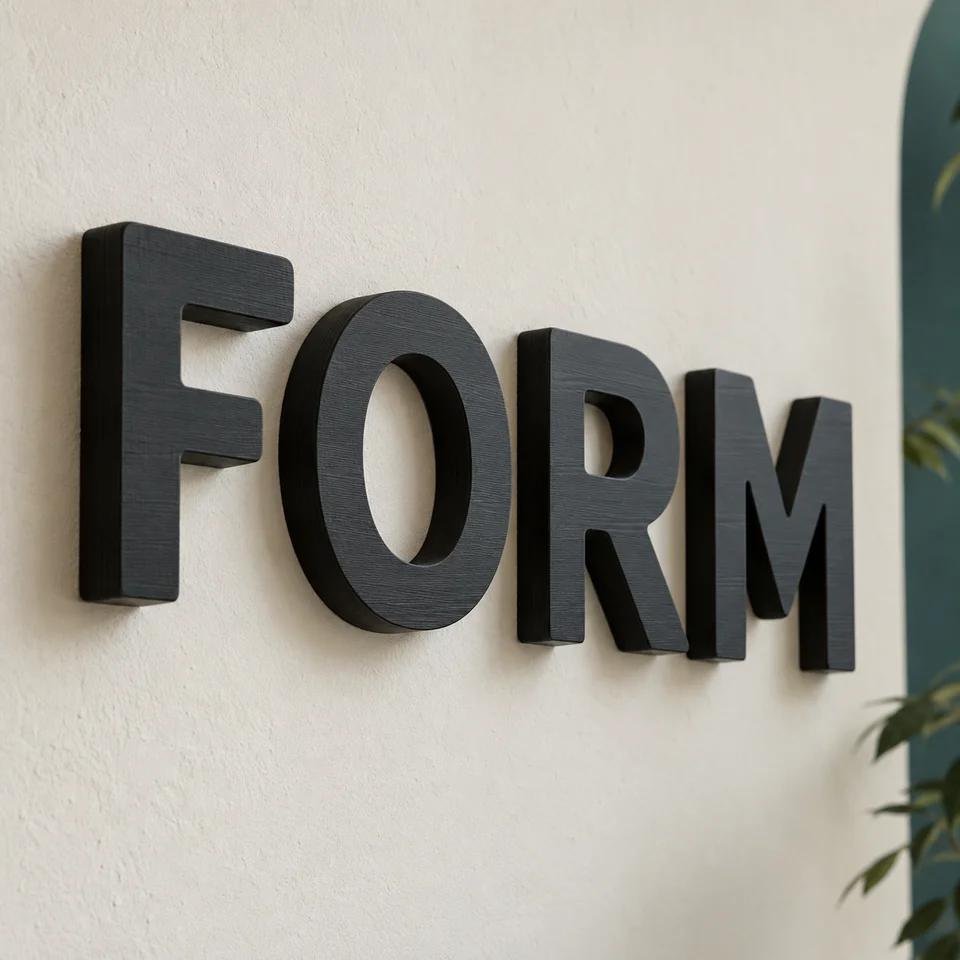
| Wood | MDF, plywood, OSB or solid rubber wood, left raw, stained or painted | No | Cafés, bakeries, studios and weddings. Indoor and sheltered positions only |
| Flat-cut metal | 304 stainless in hairline, mirror, gold or black, or Colourbond steel, as a thin plate on studs | No | Lobbies, building names, an outdoor fascia |
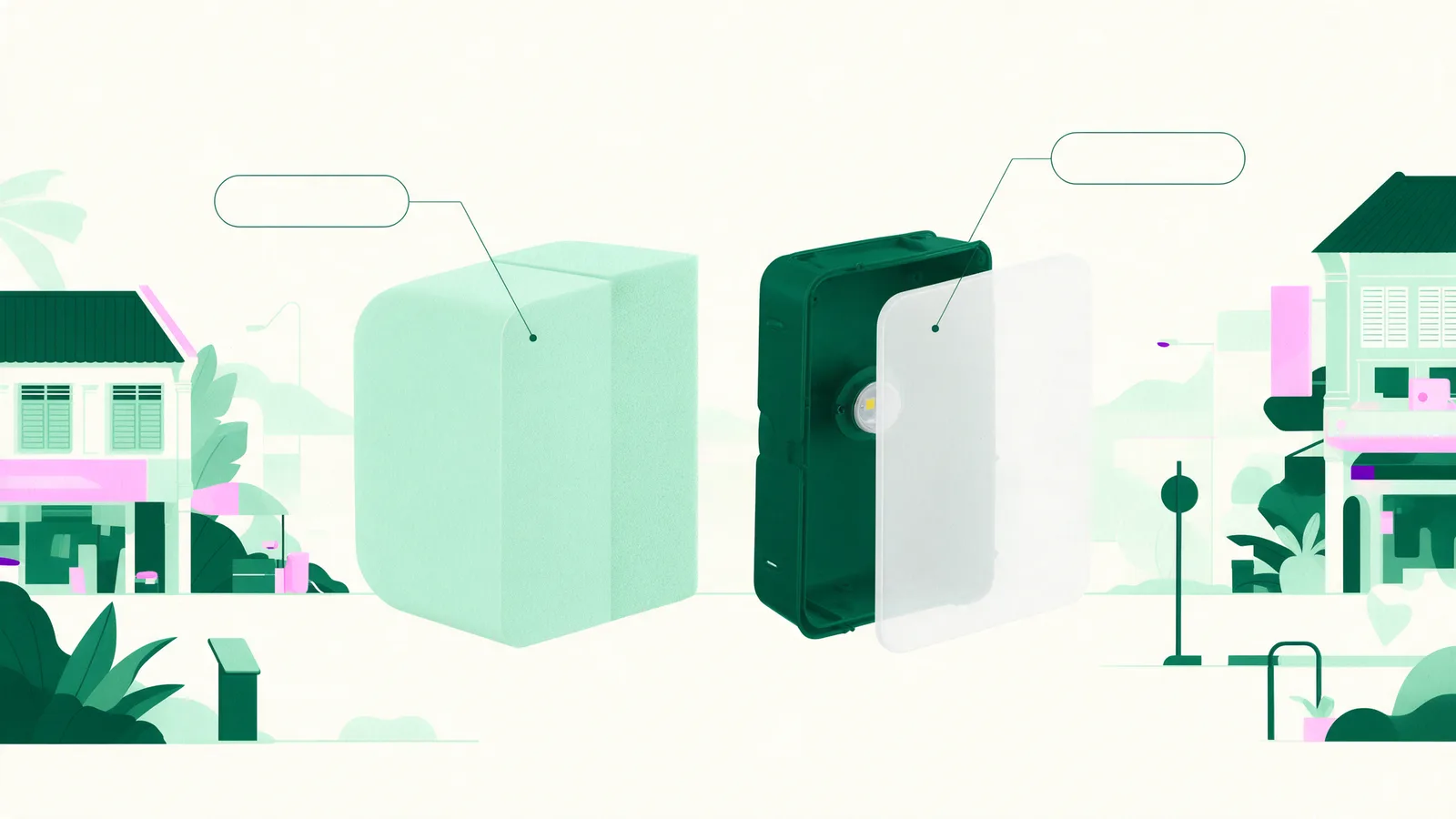
| 3D-printed, 20 mm | Black, white or grey PLA or PETG, for shapes that are hard to cut from a sheet | No (white suits LED behind it) | Detailed shapes and logo marks |
| EG steel box-up | Painted steel box with an acrylic front face | Yes, front-lit | The cheapest properly lit shopfront letter |
| Aluminium box-up | Aluminium box with an acrylic front face, 1, 2 or 3-inch return | Yes, front-lit | Shopfront fascias. Rust-proof and light for its size |
| Stainless steel box-up | Brushed silver or gold, metal front and sides | No front lighting | Entrances and brand walls |
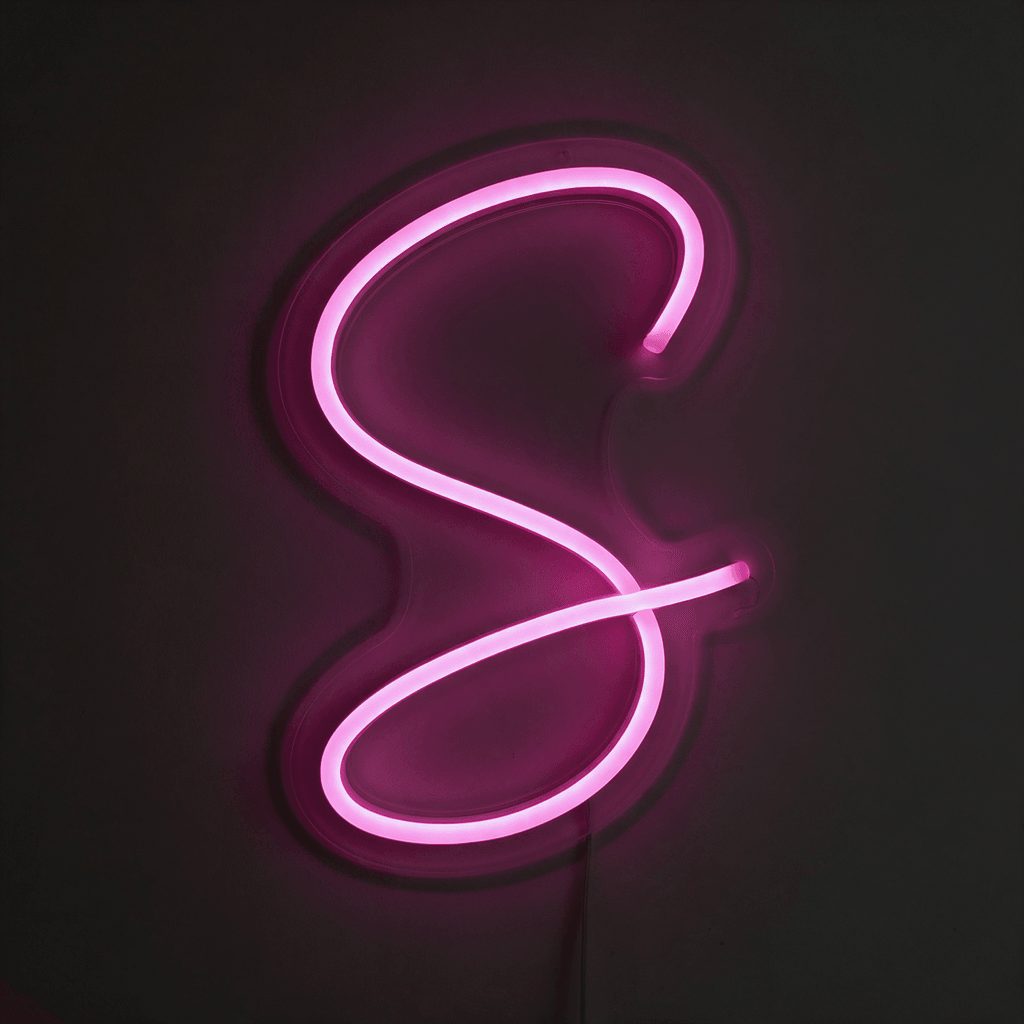
| Backlit (halo) letters in aluminium, stainless steel or EG steel | Solid face, light thrown onto the wall behind | Yes, as a halo | Reception walls, hotel lobbies, a quieter fascia |
With PVC foam the thickness is about depth of shadow. 5 mm is the thinnest and cheapest and is light enough for double-sided tape; 25 mm throws a strong shadow and looks close to a box-up letter.
For fonts, minimum letter heights and what can be folded into a box-up, see how to choose sign letters.
Front-lit or backlit halo?
These are two different letters, not a setting.
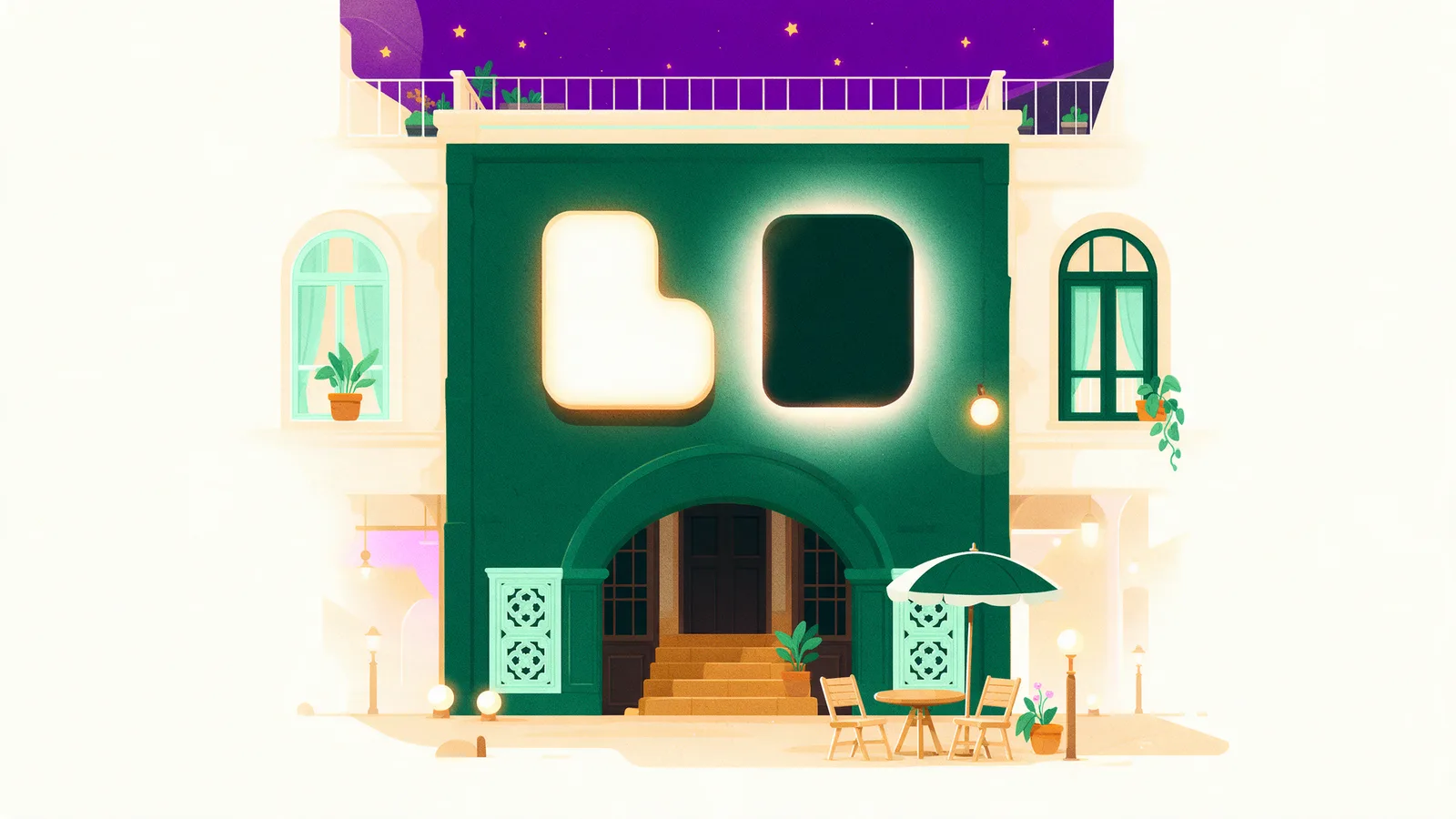
- Front-lit — the letter has an acrylic face and the LED inside shines out through it. The letter itself glows, so it reads from down the street.
- Backlit halo — the face is solid and the light goes backwards onto the wall. You see a glowing outline around a dark letter. It is softer and less readable from far away.
Choose front-lit if the job of the sign is to be found. Choose halo if it is to be admired — a reception wall, a hotel lobby, a boutique.
There is also unlit box-up: the same metal box with no LED fitted. You get the depth and the metal without wiring.
What 3D signboard letters cost
Prices from our live price engine on 3 October 2026, for one line of lettering at two sizes. They are priced on the full width of the line; when you type your actual words on the product page, the price can only come down.
| Letter type | 100 × 20 cm line | 240 × 30 cm line |
|---|---|---|
| 5 mm white PVC foam | RM55.00 | RM144.00 |
| 10 mm white PVC foam | RM74.00 | RM194.40 |
| 15 mm white PVC foam | RM98.00 | RM256.80 |
| 25 mm white PVC foam | RM138.00 | RM364.80 |
| 3 mm black matte acrylic | RM93.00 | RM244.80 |
| 5 mm black matte acrylic | RM117.00 | RM307.20 |
| 12 mm MDF wood | RM107.00 | RM283.20 |
| 3D-printed, black PLA / PETG | RM162.00 | RM451.20 |
| 0.5 mm EG Colourbond steel, flat-cut | RM186.00 | RM489.60 |
| 1 mm hairline stainless, flat-cut | RM570.00 | RM1,464.00 |
| EG steel box-up, unlit | RM220.00 | RM494.40 |
| Aluminium box-up, unlit | RM250.00 | RM553.20 |
| EG steel backlit halo, lit | RM420.00 | RM906.40 |
| Aluminium backlit halo, lit | RM450.00 | RM960.40 |
| EG steel box-up, front-lit | RM464.00 | RM1,041.28 |
| Aluminium box-up, front-lit | RM500.00 | RM1,111.84 |
| Stainless steel box-up, brushed silver, unlit | RM960.00 | RM2,448.00 |
| Stainless steel backlit halo, hairline, lit | RM1,088.00 | RM2,708.80 |
What sits behind those numbers:
- Lit prices include the lighting. Front-lit letters are priced with a 2-inch return, outdoor LED and a 100 W outdoor driver; halo letters with outdoor LED and the same driver.
- Price follows the size of the line, its width and the height of the letters together, and the material.
- Each range has a minimum charge: RM30 for PVC foam (RM40 in 25 mm), RM40 for 3D-printed, RM220 for EG steel box-up, RM250 for aluminium box-up and RM750 for stainless steel box-up.
- The largest line is 6 m wide with letters 1.5 m tall.
These prices are for the letters only. For a flat printed board instead, the numbers are far lower: a 4 × 2 ft ACP board is RM96.15. See how much a signboard costs in Malaysia for that comparison.
Which letters for which sign
| The sign | Letters to price first |
|---|---|
| Office or clinic reception on a budget | 10 mm PVC foam |
| Reception, boutique or salon wall | 3 or 5 mm acrylic |
| Café, bakery or studio, indoors | Wood |
| Shopfront that must read at night | Aluminium or EG steel box-up, front-lit |
| Hotel lobby or feature wall | Backlit halo letters |
| Entrance or brand wall in metal, no light | Stainless steel box-up, or flat-cut stainless |
| A detailed logo shape | 3D-printed |
How long 3D letters take
Every letter range takes 7 working days. An order confirmed (paid and artwork approved) before 2pm counts that day as day 0.
Express is available on acrylic, PVC and wood letters only, and makes them ready in 3 working days. Aluminium, stainless steel and EG steel box-up and backlit letters, flat-cut metal letters and 3D-printed letters have no Express, because they are harder to make. Express costs 30% of the order, with a RM20 minimum and a RM150 cap, and is chosen at checkout.
Before you order, check the licence
A shopfront sign in Malaysia needs an advertisement licence from your local council. Most councils require the business name in Bahasa Malaysia, at least as large as any other language, and several — DBKL among them — also require Jawi script.
Get the wording wrong on a printed board and you reprint a sheet. Get it wrong on 3D letters and every letter is made again. Confirm the wording with your council before the letters are cut. Full details in our signboard licence guide, and sizing guidance in standard signboard sizes.
FAQ
What is a 3D signboard?
A sign whose letters stand out from the wall or fascia instead of being printed flat. The letters are flat-cut from PVC foam, acrylic, wood or metal, built as hollow metal box-up letters that can hold LED, or 3D-printed.
How much does a 3D signboard cost in Malaysia?
It depends on the letters. At Tandaku a 100 × 20 cm line of lettering is RM55 in 5 mm PVC foam, RM93 in 3 mm acrylic, RM250 in unlit aluminium box-up, RM500 in front-lit aluminium box-up and RM960 in stainless steel box-up. A 240 × 30 cm shopfront line in front-lit aluminium box-up is RM1,111.84.
What are the types of 3D signage letters?
Flat-cut letters in PVC foam, acrylic, wood and metal; box-up letters in EG steel, aluminium and stainless steel; backlit halo letters in the same three metals; and 3D-printed letters.
What is the difference between front-lit and backlit letters?
A front-lit letter has an acrylic face that the LED shines through, so the letter itself glows and reads from a distance. A backlit halo letter has a solid face and throws light onto the wall behind, giving a glowing outline that is more decorative and less readable far away.
Which is better: aluminium, EG steel or stainless steel box-up letters?
Aluminium is rust-proof and light and is the usual lit shopfront letter. EG steel is the cheapest lit box-up. Stainless steel box-up has a metal face with no front lighting; choose it for an entrance or brand wall, or as a backlit halo letter.
How long do 3D letters take to make?
7 working days for every letter range. Express, 3 working days, is available on acrylic, PVC and wood letters only.
Do I need a licence for a 3D signboard?
Yes — the same advertisement licence any shopfront sign needs, from your local council. Because the wording rules (Bahasa Malaysia prominence, and Jawi in some councils) apply to the letters, confirm the text with the council before anything is cut.
Price the letters for your sign — pick a letter range, enter the width and height of your lettering, choose the lighting, and the price updates as you go.