
Lamination is a clear film bonded over a finished print, and on a UV print it earns its money quickly: UV ink cures as a hard layer sitting on top of the material rather than soaking in, so it is the first thing a fingernail, a trolley wheel or the midday sun gets to. At Tandaku the Protective Lamination tick is RM15 per square metre on printed boards — RM11.16 on a 2 × 4 ft PVC foam board — with thicker anti-slip and writable gloss films for floor stickers and magnets. This guide covers what the film does, why a UV print needs a laminate made for UV ink, how to choose matte or gloss, and which of your prints are worth laminating and which are not.
What lamination does to a UV print
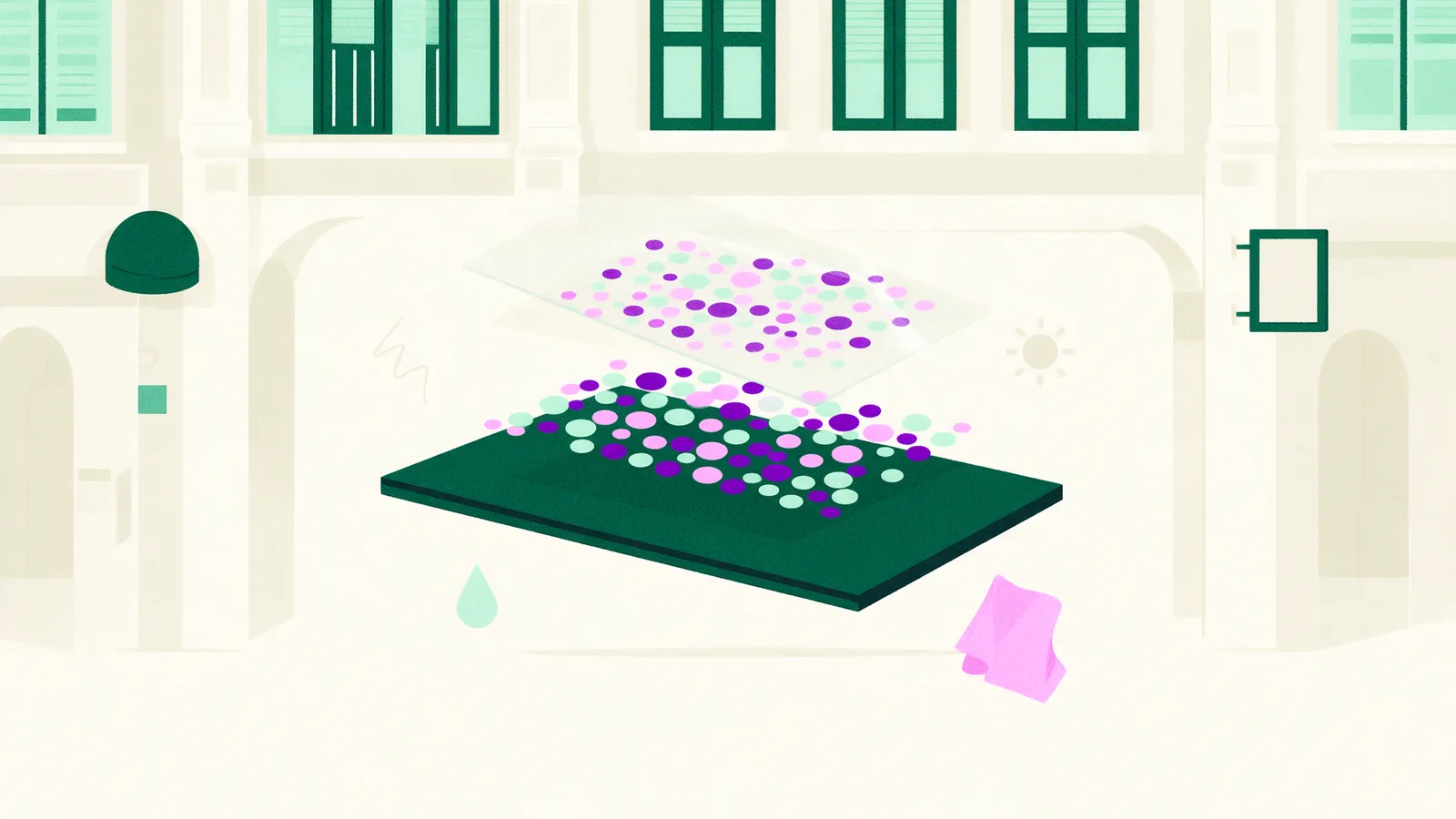
A laminate is a thin transparent film with an adhesive on one side, pressed over the print after it comes off the machine. Grafityp, a Belgian maker of print films and laminates, describes it as a transparent protective film applied over printed vinyl to improve durability and appearance, and lists four things it does (Grafityp, Laminates for UV prints, April 2026):
- Scratch and abrasion protection. Keys, fingernails, cleaning cloths, chairs dragged past a board.
- UV fade resistance. The film sits between the sun and the ink.
- Chemical and cleaning resistance. A laminated face can be wiped with a damp cloth without lifting ink.
- A finish. Matte, satin or gloss, which changes how the print looks under light.
The reason it matters more on a UV print than on an eco-solvent one is how the ink sits. Eco-solvent ink soaks into vinyl. UV ink is cured instantly under ultraviolet lamps and stays as a layer on top of the material — we describe the difference in our colour variance guide. That layer is what gives UV prints their punch, and it is also the layer that scuffs when something rubs across it. Rigid boards, floor vinyl and magnet sheet are typically UV-printed; we run both UV flatbed and eco-solvent machines.
Then there is the sun. MetMalaysia classes a UV index of 8 to 10 as very high and 11 or above as extreme, and Kota Kinabalu reached 11 at noon on 10 August 2026 (The Star, 2026). A print facing that every day fades, laminated or not. The laminate slows it down, and it is a small add-on relative to the price of the print.
Why UV prints need a UV-specific laminate
Not every laminate bonds well to UV ink, and this is the part of the Grafityp guide worth repeating to anyone buying a laminated print. Because UV ink cures the instant it lands, it has no time to level out. The cured surface is slightly rough, a micro-texture, rather than the smooth skin an eco-solvent print dries to. A laminate adhesive has to flow into that texture to bond properly, which is why Grafityp tells sign makers to use laminates formulated for UV ink and to test each printer, ink and laminate combination before a production run.
There is also a pairing rule: combine the laminate with a print film from the same family, so the two layers stretch, shrink and age at the same rate. A stiff laminate over a soft film, or the other way round, lifts at the edges or wrinkles as the two move differently in the heat.
As a buyer you do not choose the roll of laminate. What you can do is look at the result before you accept it — which brings us to the defect that shows when the pairing is wrong.
Silvering: the milky haze on a badly laminated print
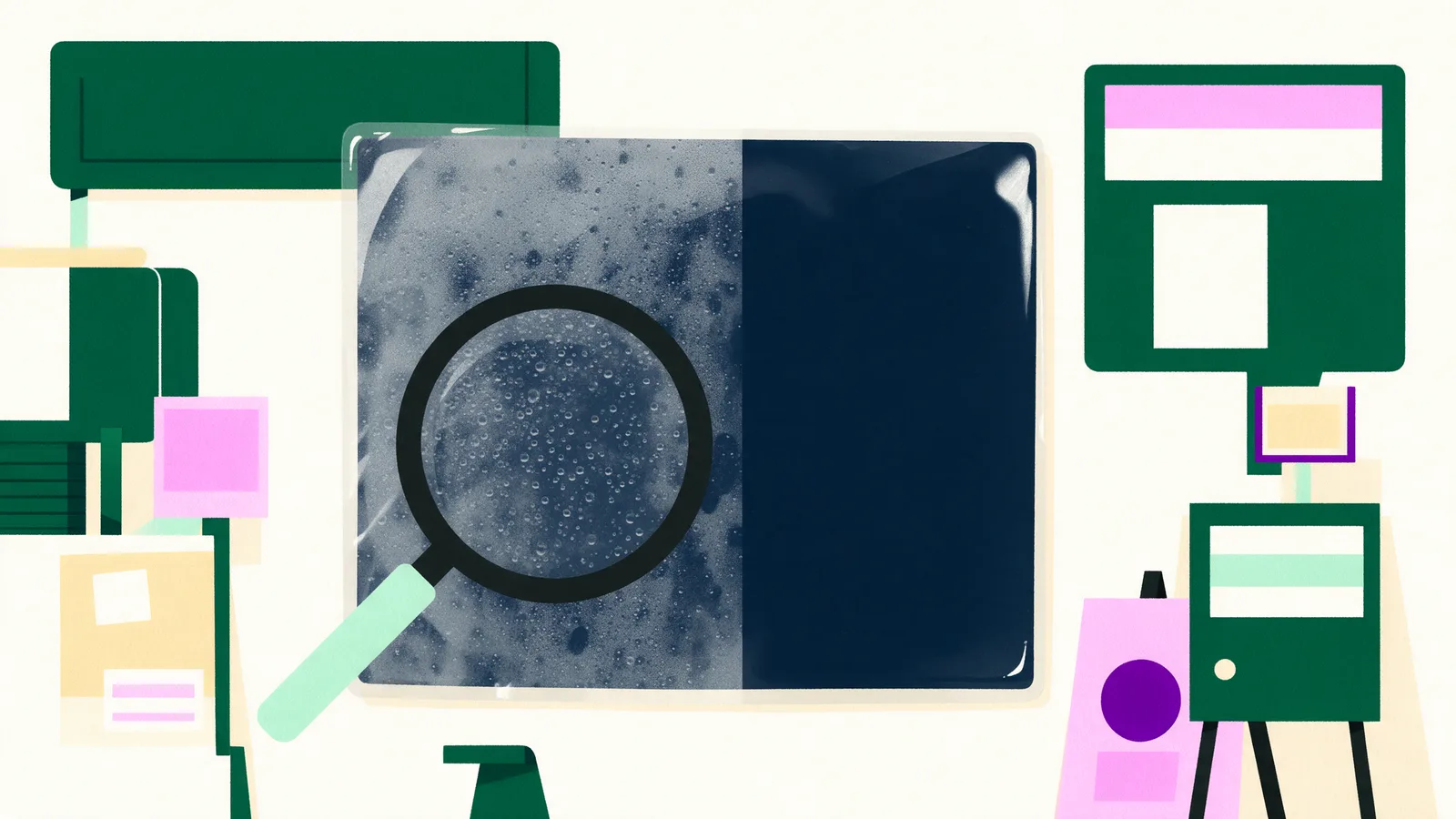
Silvering is the name for a laminated print that looks milky or grey, as if there were a thin fog under the film. It is caused by tiny air bubbles trapped between the adhesive on the laminating film and the surface of the print, and it is most noticeable in the dark shadow areas of an image (Nekoosa, Laminating Tips: Silvering, 2021). On UV prints the rough cured surface is exactly what traps that air, so a laminate whose adhesive does not flow into the texture is likely to silver however carefully it is applied.
Silvering does not make a sign fall apart, but it does three things you paid to avoid: the colours look duller, the dark areas look grey instead of black, and the whole piece looks cheaper than the unlaminated print did. Grafityp's list of consequences of the wrong laminate is the same list: inconsistent finishes between batches, silvering that shows under certain lighting, shorter life, and rework.
How to check a laminated print: hold it so a light reflects off the surface and look at the darkest areas. A clean lamination shows the black as black. A silvered one shows a grey sheen with fine speckles that are not in the artwork. A laminated print should look like the unlaminated print with a finish on it, nothing more.
Matte or gloss: which finish to choose
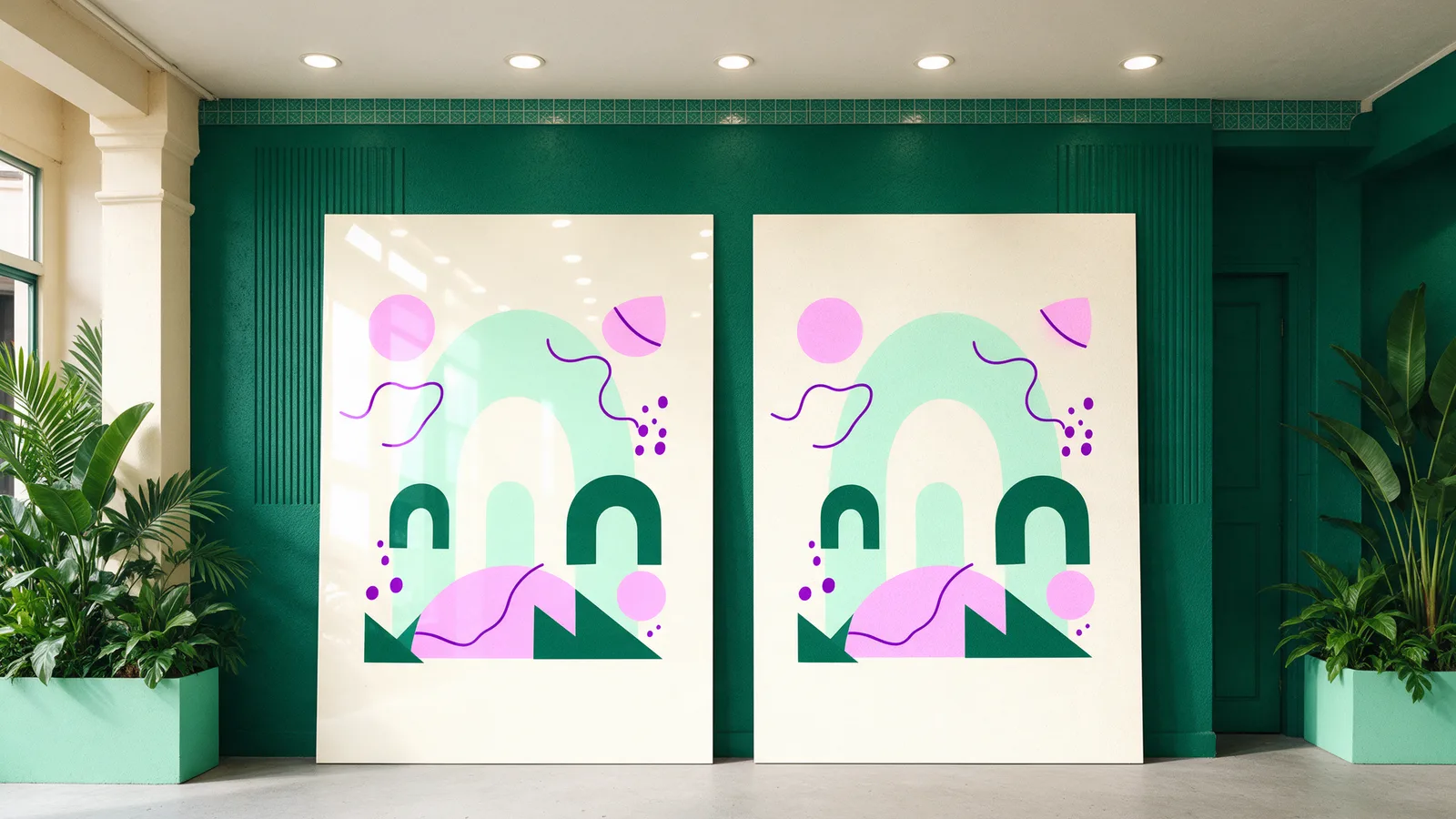
Our board laminate comes in matte or gloss, and the choice is about light, not protection.
- Gloss deepens colour and makes blacks look richer, which is why product photos and bold brand colours look best under it. The trade-off is reflection: under a row of downlights or facing a glass shopfront, a gloss board shows the lights and the street in its surface.
- Matte cuts the reflection and reads cleanly from any angle, which is what you want for anything that has to be read — menus, directories, permanent price boards, safety signs, anything under bright retail lighting or in front of a camera. It desaturates the print slightly, and can warm or cool the tone a touch depending on the film.
Two special cases do not offer the matte or gloss choice. Floor stickers take either a hard, glossy tempered-glass laminate or a thick textured anti-slip laminate; the anti-slip film softens colour more than either matte or gloss because it is textured on purpose. Magnets and giant cheques take a gloss laminate because gloss is what a whiteboard marker wipes cleanly off, so the same lamination that protects the print also makes it writable.
If you approved colour on an unlaminated proof, say which laminate the final piece will carry. The finish changes the colour, and a proof without it is a proof of a different-looking object.
Monomeric, polymeric or cast: the three laminate families

Laminates, like the print films under them, come in three families. The difference is how the PVC film was made and therefore how much it stretches and how long it lasts.
| Family | Made for | Where it goes |
|---|---|---|
| Monomeric | Flat surfaces, indoor, short-term outdoor | Promotional graphics, temporary signs, boards |
| Polymeric | Outdoor signs, slight curves, medium to long term | Shopfront signs, gently curved panels |
| Cast | Vehicle wraps, compound curves, long-term outdoor | Bumpers, mirrors, anything wrapped round a shape |
A flat board does not care which family protects it; all three lie flat. The families matter when the print has to bend. A polymeric film follows a gently curved panel and holds its size outdoors, which is why Grafityp calls it the industry-standard choice for sign makers. A cast film is the only one that stretches over a compound curve, such as a car bumper, without lifting back, and it is the only one to put over a cast print film. Grafityp also notes a fourth, newer group, PVC-free polymeric laminates, for organisations with environmental targets.
What this means for the things we sell:
- Rigid boards, mounting boards, display stands and standees are flat, so the Protective Lamination covers them all.
- Vehicle stickers are printed on a polymeric bubble-free film with a grey backing, supplied unlaminated. It conforms to doors, bonnets and gently curved panels — see the car sticker guide. A full wrap that has to go round bumpers and mirrors is a cast print film with a cast laminate, a wrap-shop job rather than a printed sticker, and there is no wrap product on our vehicle sticker page.
- Wall, window and label stickers are also supplied unlaminated at Tandaku; the lamination tick exists on floor stickers and magnets, where the film is doing a specific job.
What it costs to laminate a signboard, floor sticker or magnet
Lamination is priced per square metre of the print, so the extra scales with the board. Every figure below is from the price calculator on 16 September 2026, before quantity discounts.
| Product | Laminate | Rate | Worked example |
|---|---|---|---|
| Signage boards and plastic signs (KT, PVC foam, PP hollow, MDF, PC sheet) | Protective Lamination, matte or gloss | RM15 / m² | 2 × 4 ft PVC foam 5 mm: RM72.11 plain, RM83.27 laminated (+RM11.16) |
| Mounting boards (posters on board) | Protective Lamination, matte or gloss | RM15 / m² | A1 KT board: RM32.27 plain, RM39.76 laminated (+RM7.49) |
| Display stands, A-frames, human standees | Protective Lamination, matte or gloss | RM15 / m² | 600 × 1600 mm KT standee: RM76.42, of which lamination is RM14.40 |
| Floor stickers | Tempered Glass Lamination (hard gloss) | RM15 / m² | 600 × 600 mm white vinyl: RM11.62 plain, RM17.02 laminated |
| Floor stickers | Bubble-Free 500 micron Anti-Slip Laminate | RM26.90 / m² | 600 × 600 mm white vinyl: RM21.30 laminated |
| Magnets | Gloss Lamination (writable) | RM21.60 / m² | Pair of 600 × 400 mm car door magnets: RM36.14 plain, RM46.50 laminated |
| Giant cheques | Gloss Lamination (writable) | RM15 / m² | 4 × 2 ft KT board cheque: RM91.16 laminated |
Three details worth knowing before you tick the box:
- Double-sided boards laminate twice. A 2 × 4 ft PVC foam board printed on both faces is RM116.76; laminated on both faces it is RM139.08, an extra RM22.32 rather than RM11.16, because two faces really is twice the film.
- A floor sticker takes one laminate, not both. The tempered-glass film and the anti-slip film both sit on top of the print, so the calculator lets you choose one. Tempered glass is the cheaper and is the one we recommend for most floors; the 500 micron anti-slip film is for wet areas and heavy trolley traffic.
- Lamination does not add a day. A laminated board is still 5 working days from artwork approval, and Express next-working-day dispatch still applies.
Lamination is not offered on ACP or printed acrylic at Tandaku, and there is no laminate tick on wall, window, vehicle or label stickers. If a job needs one of those laminated, ask us before ordering rather than assuming it can be added later.
Which prints to laminate, and which to leave

The film costs a fraction of the print. The question is whether the print will meet sun, hands or shoes.
Laminate it:
- Any board in direct sun or rain — a PVC foam or PP hollow sign on a shopfront, a gate or a site fence. This is the case the outdoor signage guide makes: the laminate is the cheapest life extension available for a sign in full sun.
- Any board people touch or brush past — a menu board at a counter, a directory in a corridor, a human standee at an entrance, an A-frame on a pavement that gets folded and carried every day.
- Every floor sticker that will be walked on. An unlaminated floor decal in a busy doorway starts looking worn within weeks; the tempered-glass laminate takes the scuffing that shoes would otherwise grind into the ink.
- Car door magnets. The gloss laminate resists scratches on a panel that gets washed, and it makes the magnet writable — see the magnetic sticker guide.
- Anything you want to write on and wipe. Giant cheques and whiteboard magnets take the writable gloss film.
Leave it:
- A board for one event indoors. An A1 KT board that stands at a launch for a day and is thrown out afterwards does not need RM7.49 of film.
- A poster behind glass or in a frame. The glass is the laminate.
- A print you will replace every month. Promo boards and price boards that change with each campaign are cheaper reprinted than protected.
- A KT board you were hoping to use outdoors. Lamination protects the printed face; it does not seal the paper faces and edges of a KT board against rain. Outdoors, choose PVC foam or PP hollow and laminate that — the board printing guide explains which board survives where.
Looking after a laminated print
A laminated face cleans with a soft cloth and water, or a little mild soap for greasy marks. Do not use thinner, acetone or scouring pads; they dull the film. A laminated floor sticker can be mopped along with the rest of the floor, which is what the anti-slip film is designed for. Laminated magnets should come off for a pressure wash and go back on a dry panel. Nothing here stops the sun entirely: a laminated board in full sun will still fade eventually, only later than the same board without it.
FAQ
Is lamination the same as a UV coating?
No. A laminate is a solid film pressed over the print. A liquid clear coat is a varnish applied over the print and cured, which some printers prefer on UV prints because it does not silver. Tandaku's lamination is a film, in matte or gloss, and the floor and magnet laminates are thicker films chosen for grip and for writing on.
Does lamination stop a print from fading?
It slows fading, it does not stop it. The film absorbs part of the UV before it reaches the ink, so a laminated board in the sun keeps its colour longer than the same board without it. Nobody can honestly promise a number of years for a print in direct Malaysian sun, laminated or not.
Does lamination change the colour of my print?
Yes, slightly. Gloss deepens colour and makes blacks richer; matte cuts reflection and desaturates a little; the textured anti-slip floor film softens colour more. If colour matters, approve a proof with the laminate you are ordering.
Can I laminate a sticker?
At Tandaku, floor stickers and magnets have a lamination option. Wall, window, vehicle and label stickers are supplied unlaminated, and lamination is not offered on ACP or printed acrylic.
Matte or gloss for a shop sign?
Matte for anything that has to be read under bright lights or facing a window, because it does not reflect. Gloss for colour-led graphics and for anything you want to write on with a whiteboard marker.
Does a laminated board take longer to make?
No. A laminated board is 5 working days from artwork approval like an unlaminated one, and Express next-working-day dispatch is still available.
What is silvering, and how do I know if my print has it?
Silvering is a milky or grey haze caused by air trapped between the laminate adhesive and the rough surface of a UV print. Look at the darkest areas of the print with a light reflecting off it: if the black shows a grey sheen with fine speckles that are not in the artwork, the lamination has silvered.
Price a laminated print
Tick Protective Lamination and choose matte or gloss on any signage board, mounting board or plastic sign; choose the tempered-glass or anti-slip film on floor stickers; and add the writable gloss laminate on magnets and giant cheques. Every price updates as you change the size, and every piece is printed to order in Seri Kembangan.