











Most outdoor signs in Malaysia do not fail because the print faded. They fail at the fixings, at the edges, or because water got behind them. Choosing the right board is the easy part — and if that is what you need, see acrylic vs ACP vs KT board. This guide is about everything that happens after the board is chosen.
What actually kills an outdoor sign

| Failure | Cause | Prevention |
|---|---|---|
| Sign falls or sags | Too few fixing points, or fixings into weak substrate | Drilled corner holes minimum; more points on long spans |
| Edges lift and peel | Water tracking behind an unsealed edge | Sealed edges, and standoffs so the face can drain and dry |
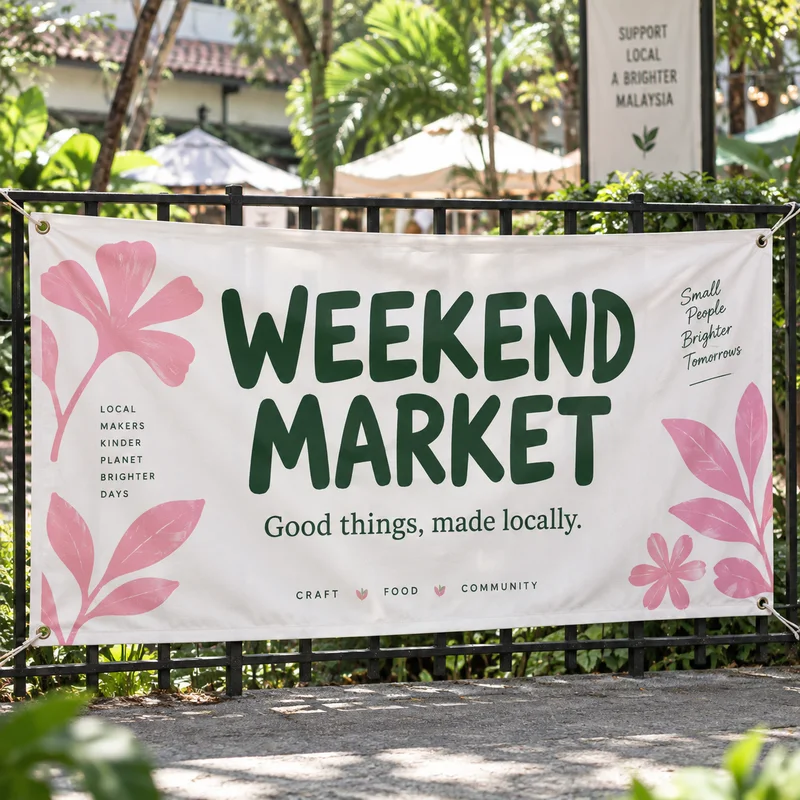
| Banner tears at eyelets | Wind load on a solid face | Mesh in exposed spots; eyelets every 2-3 ft, not just corners |
| Print dulls | UV exposure over years | Protective lamination, RM15 per square metre |
| Board warps | Foam-based board used outdoors | Use ACP; KT board and foam-core are indoor-only |
Lamination: worth it or not?

Protective lamination is RM15 per square metre — RM11.16 on a 2 x 4 ft PVC foam board that costs RM72.11 (it is not offered on ACP). For a sign in full sun it is the cheapest life extension available, and it also resists scratching during installation and cleaning. What the film does, matte versus gloss, and why a UV print needs a laminate made for it are in our lamination guide.
For a sign under a covered walkway or facing away from direct sun, it is optional.
Mounting properly

- Drilled corner holes (RM5) are the minimum for a screw-mounted board. They arrive ready to fix.
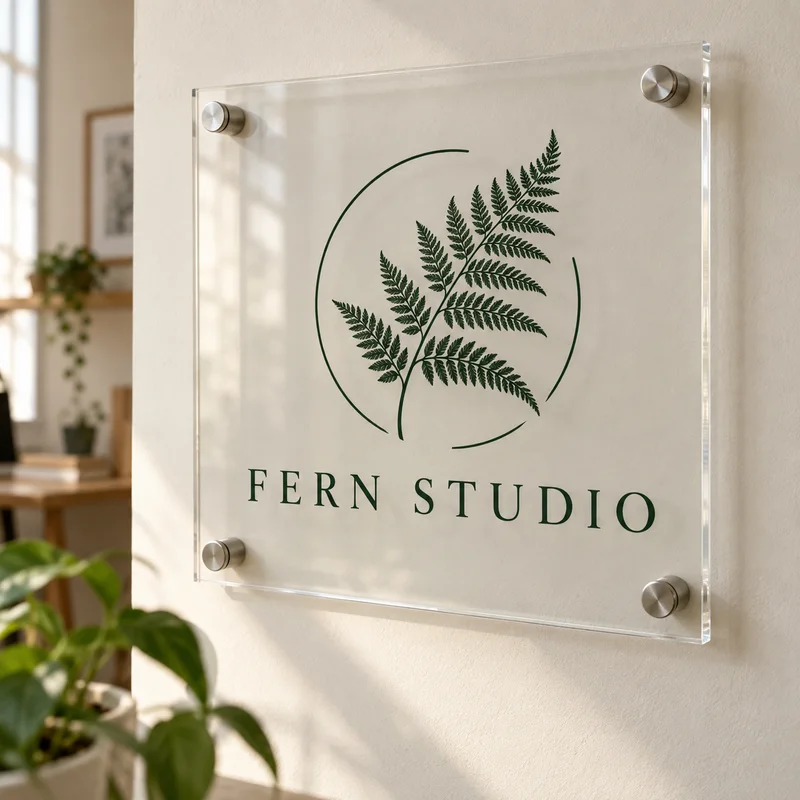
- Standoff mounts (RM12 per set of four) lift the sign off the wall. Beyond looking better, the air gap lets water drain and the back dry out, which matters in Malaysian humidity.
- More fixing points on long spans. A sign fixed only at four corners will bow in the middle and eventually crack around the holes.
- Check the substrate. Fixings into old plaster or thin cladding pull out. That is a mounting failure, not a sign failure, and it is the most common one.
Wind is the thing people underestimate

A solid banner is a sail. Anything on a fence, a rooftop, scaffolding or above the first floor should be mesh, which lets wind pass through instead of catching it. The material costs slightly more per square foot and saves the whole sign.
For rigid boards in exposed positions, add fixing points rather than relying on four corners.
Maintenance

Rinse with water and a soft cloth every few months, especially near a main road where exhaust film builds up and dulls the surface. Avoid solvent cleaners on acrylic, which can craze it. Check the fixings once a year — a loose screw caught early is not a fallen sign.
FAQ
Why do outdoor signs fail in Malaysia?
Rarely from fading. The usual causes are too few fixing points, water tracking behind an unsealed edge, wind loading on a solid banner face, or a foam-based board used outdoors when it was only ever suitable indoors. All four are preventable at order time.
Is UV lamination worth it on an outdoor sign?
For a sign in direct sun, yes. It is RM15 per square metre — roughly RM11 on a 2 x 4 ft board — and it protects against both UV dulling and scratching during installation and cleaning. Under shelter it is optional.
How long does an outdoor sign last in Malaysia?
A properly mounted ACP sign lasts several years of direct sun and monsoon rain. Lifespan is governed far more by mounting and exposure than by the board, which is why identical signs on the same street can last very different lengths of time.
How do I stop a banner tearing in the wind?
Use mesh, which lets wind pass through rather than catching it, and add eyelets every 2-3 ft instead of only at the four corners so the load spreads along the edge. Solid banners in exposed positions tear at the eyelets first.
How often should I clean an outdoor signboard?
Every few months with water and a soft cloth, more often near a main road where exhaust film dulls the surface. Avoid solvent cleaners on acrylic. Check fixings annually.