



















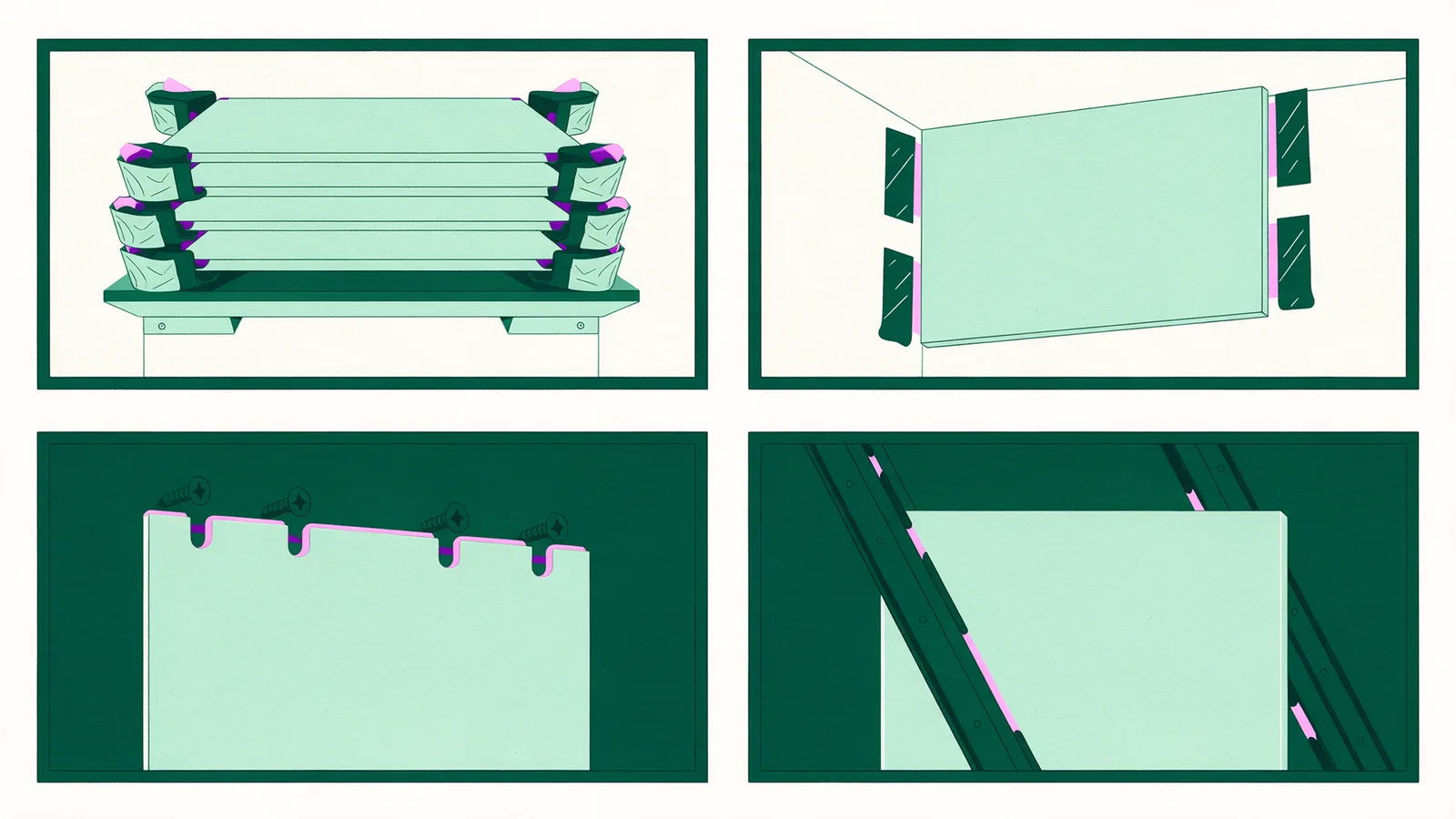
The four ways to mount an acrylic sign are standoff bolts, VHB double-sided tape, keyhole slots and a French cleat. Which one you use depends on two things: the weight of the panel and what the wall is made of. Standoffs are the safe default for anything above roughly A3, tape is for small light panels on smooth walls, and a cleat is for a heavy panel you may want to take down again.
Acrylic is stiff but brittle. Nearly every cracked sign was cracked by the mounting, not by the acrylic.
Pick the method by weight and wall
| Method | Best for | Wall types | Removable? |
|---|---|---|---|
| Standoff bolts | A3 and up, any weight, premium look | Plaster, brick, concrete, tile | Yes (leaves 4 holes) |
| VHB tape | Small light panels, up to about A4 | Smooth painted plaster, glass, tile, metal | Hard — tape is very strong |
| Keyhole slots | Medium panels, flush mount, no visible fixings | Plaster, brick, concrete | Yes, lifts off |
| French cleat | Large or heavy panels, reception logos | Brick, concrete, stud walls | Yes, lifts off |
A 60 × 60 cm 3 mm acrylic panel — RM77.51 from our configurator — is comfortably in standoff or keyhole territory. A 30 × 30 cm panel at RM19.38 is a tape job.
Method 1: standoff bolts (the default)

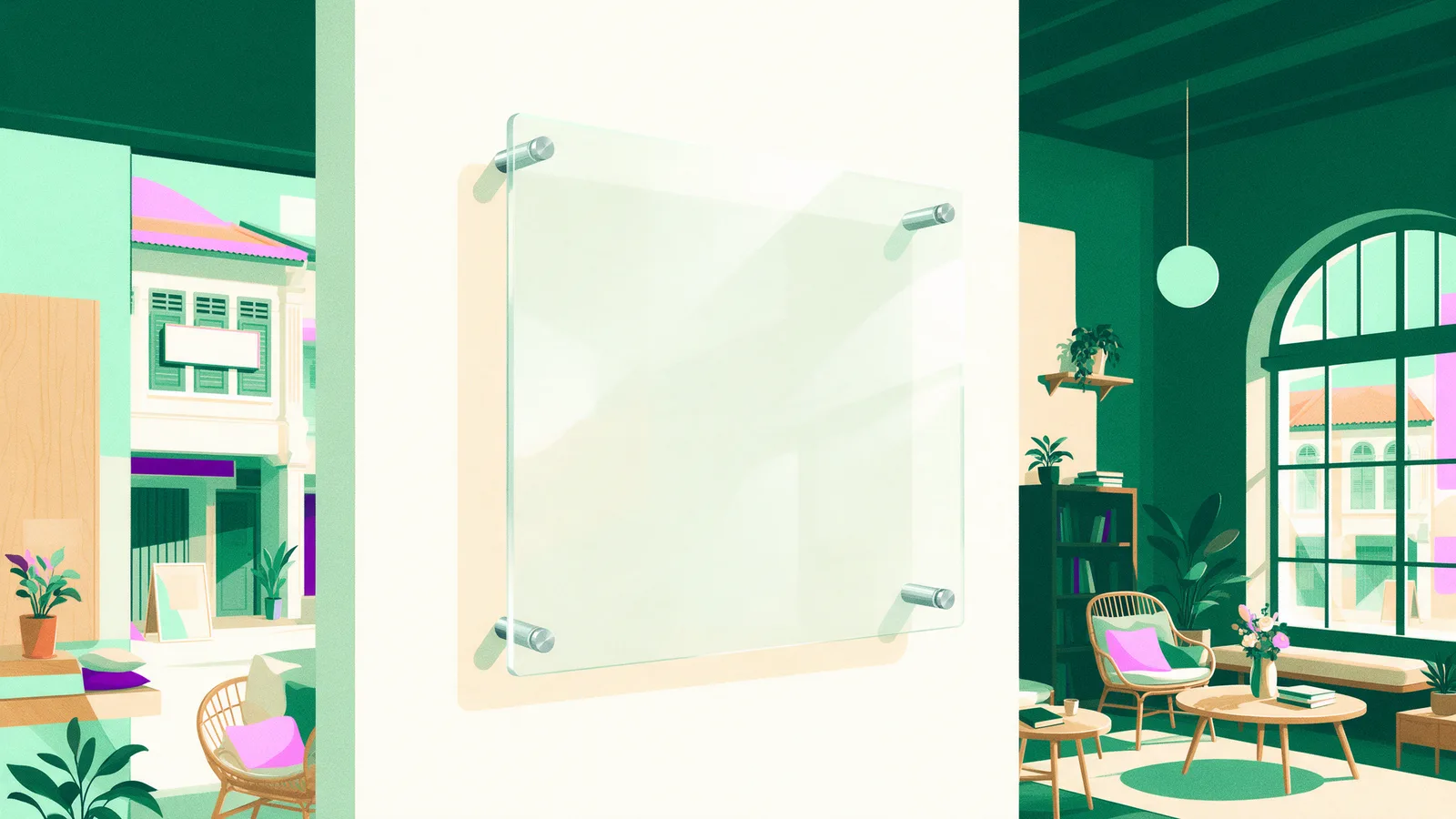
Standoffs are the chrome or brushed-steel barrels that hold a sign a centimetre or two off the wall. They look deliberate, they let light wrap behind the panel, and they carry weight properly.
- Order the panel with the holes already drilled. This is the important step. Acrylic drilled with an ordinary twist bit grabs and cracks — the bit needs to be ground for plastic, run slow, with the panel backed. Ask for the holes at the point of order and the risk is ours, not yours.
- Set the holes in from the corners, typically 20–30 mm, and size them about 1 mm larger than the barrel so the panel can move slightly with temperature.
- Mark the wall through the panel itself, not from a measurement. Hold it up, level it, mark through the holes.
- Drill and plug the wall, fit the barrels, then offer the panel up and cap each one.
- Do not fully tighten the caps. Snug, then a nudge. Over-torqued caps are the second most common cause of a star crack around the hole.
Four standoffs handle most panels. Go to six for anything wider than about 1.2 m so the middle cannot bow.
Method 2: VHB double-sided tape
VHB — very high bond — is acrylic foam tape, and on the right surface it is genuinely permanent.
- Only on smooth, sound, non-porous surfaces. Painted plaster in good condition, glass, glazed tile, metal. It will not hold on bare brick, textured render, or flaking paint, and on wallpaper it will hold and take the wallpaper with it.
- Clean both faces with isopropyl alcohol and let them flash off. Skipping this is why tape mounts fail.
- Run tape around the perimeter, not in dots, and add one central strip on larger panels.
- Press hard for 30 seconds. VHB builds strength under pressure, not time alone, and reaches most of its bond in the first hour.
- Keep to about A4 and up to a couple of hundred grams. Above that, gravity plus a warm wall will find the weak spot eventually.
Bear in mind it is close to irreversible: removal usually means cheese-wire, solvent and touching up the paint.
Method 3: keyhole slots
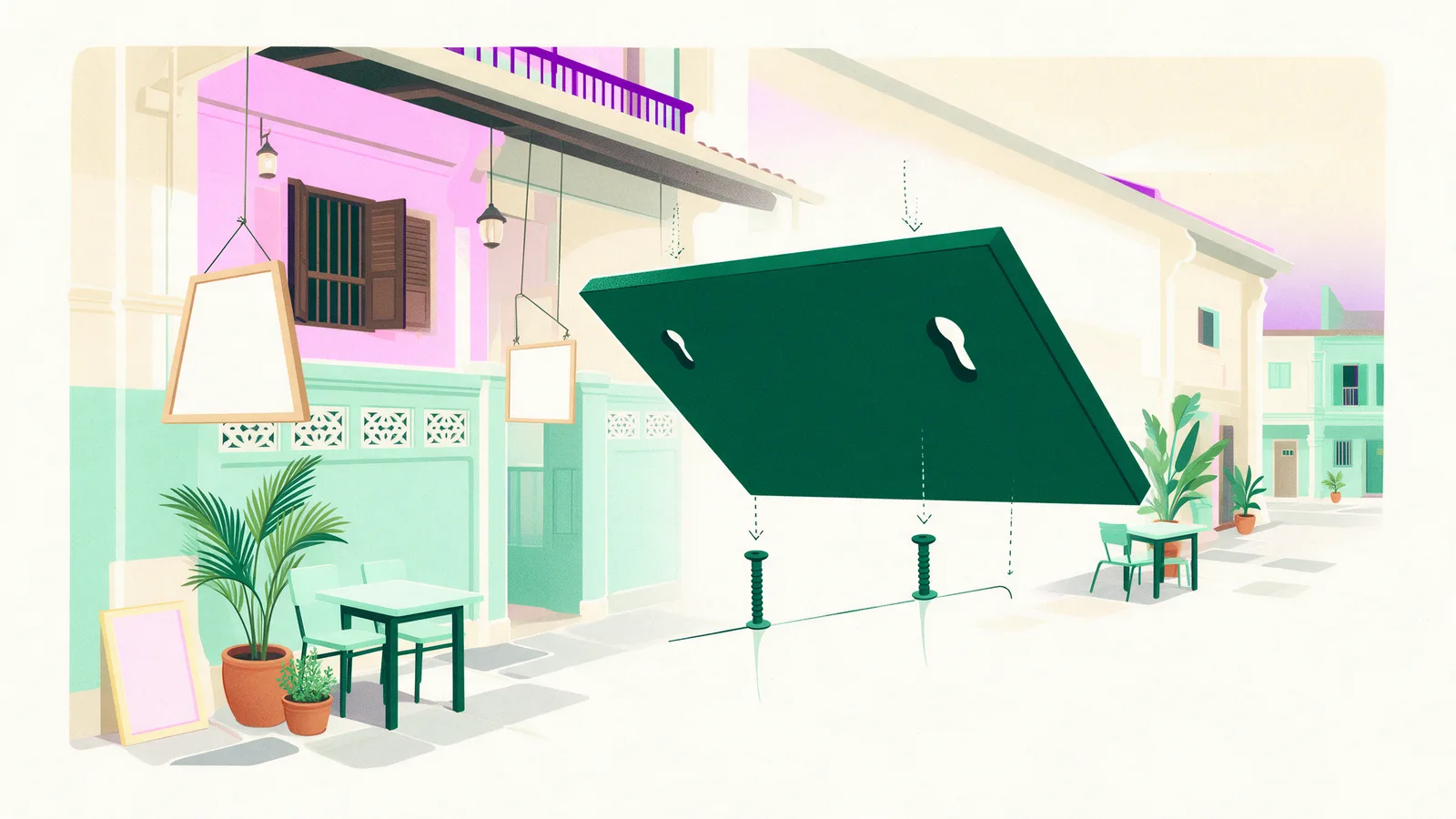
A keyhole slot is a routed pocket in the back of a thicker panel that drops onto a screw head, leaving no fixing visible from the front. It needs material to bite into, so this is a 5 mm and up technique, not a 3 mm one — see 5 mm acrylic.
Mount the screws first, leave the heads standing 3–4 mm proud, hang the panel and let it settle down onto them. Get the two screws level with each other or the sign will sit crooked and there is no adjustment afterwards.
Method 4: French cleat
Two interlocking strips cut at 45°, one on the wall and one on the back of the sign. The panel lifts on and off, the weight is carried along the whole width instead of at four points, and nothing shows.
This is the right answer for a large reception logo panel, especially in a rented unit where the sign has to come down again intact.
Can acrylic signs be used outdoors in Malaysia?

Yes for a covered position, no for full sun. Acrylic itself is UV-stable and does not yellow quickly. Two other things do fail:
- The print. Direct equatorial sun fades printed colour long before the acrylic degrades.
- Thermal movement. Acrylic expands and contracts noticeably with heat. In a mount that pins it rigidly, that movement has nowhere to go and the panel crazes or cracks around the fixings — which is exactly why standoff holes should be drilled oversize.
Under a porch, a covered walkway or a shop's five-foot way, acrylic lasts well. On an exposed shopfront wall in full sun, ACP is the material to use — 3 mm ACP is the Malaysian shopfront standard for good reason, and a 4 × 2 ft panel is RM96.15. We compare the options in acrylic vs ACP vs KT board and cover the weather question in full in making outdoor signage last.
Three mistakes that crack acrylic
- Drilling it yourself with a wood bit. The bit grabs as it breaks through and splits the panel. Order the holes drilled.
- Tightening the fixings down hard. Acrylic needs room to move. Snug is enough.
- Mounting a big panel on four corner fixings only. Anything over about 1.2 m wide bows in the middle and stresses the corners. Add centre fixings or move to a cleat.
FAQ
How do you mount an acrylic sign on a wall?
Four methods: standoff bolts (best for anything A3 and up), VHB double-sided tape (small light panels on smooth walls), keyhole slots routed into the back (5 mm or thicker, no visible fixings), and a French cleat (large or heavy panels you may want to remove).
Can I hang an acrylic sign without drilling the wall?
On a smooth, sound, non-porous surface, VHB acrylic foam tape will hold a small panel up to about A4 without any wall fixings. It will not hold on bare brick, textured render or flaking paint.
Can acrylic signs be used outdoors?
In a covered position, yes. In full Malaysian sun, the printed colour fades and thermal movement can crack the panel around rigid fixings. Use 3 mm ACP for exposed outdoor signs instead.
Should I drill acrylic myself?
No. Acrylic needs a bit ground for plastic, run slow, with the panel backed — a standard twist bit grabs on breakthrough and cracks it. Order the panel with the mounting holes already drilled.
How far apart should standoffs be?
Set them 20–30 mm in from each corner. Four is enough for most panels; add two in the middle for anything wider than about 1.2 m so the panel cannot bow.
What thickness of acrylic should I use for a wall sign?
3 mm is right for most flat wall-mounted signs up to about 60 × 60 cm. Go to 5 mm for larger panels, for a more substantial look on standoffs, or if you want keyhole slots routed into the back.
Know your size? Price an acrylic sign instantly — type the width and height and the number appears. Tell us in the order notes where the mounting holes should go.