










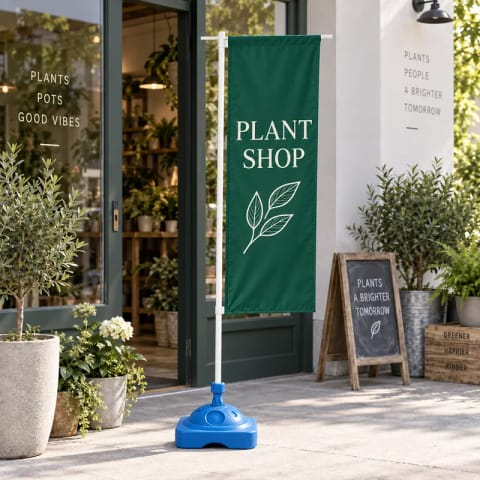
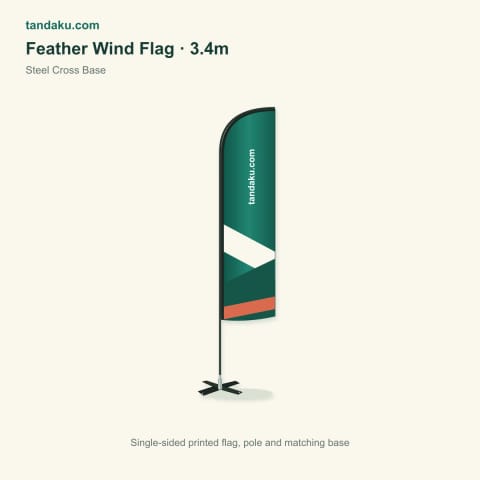
Prepare wind flag artwork to the fabric dimensions of your chosen model, allowing for the pole sleeve and shaped edges before placing important wording. Tandaku's wind flags are printed single-sided, so the reverse shows a lighter, mirrored version of the design. Check that appearance before deciding what the flag should say.
Which flag shape should you choose before designing?
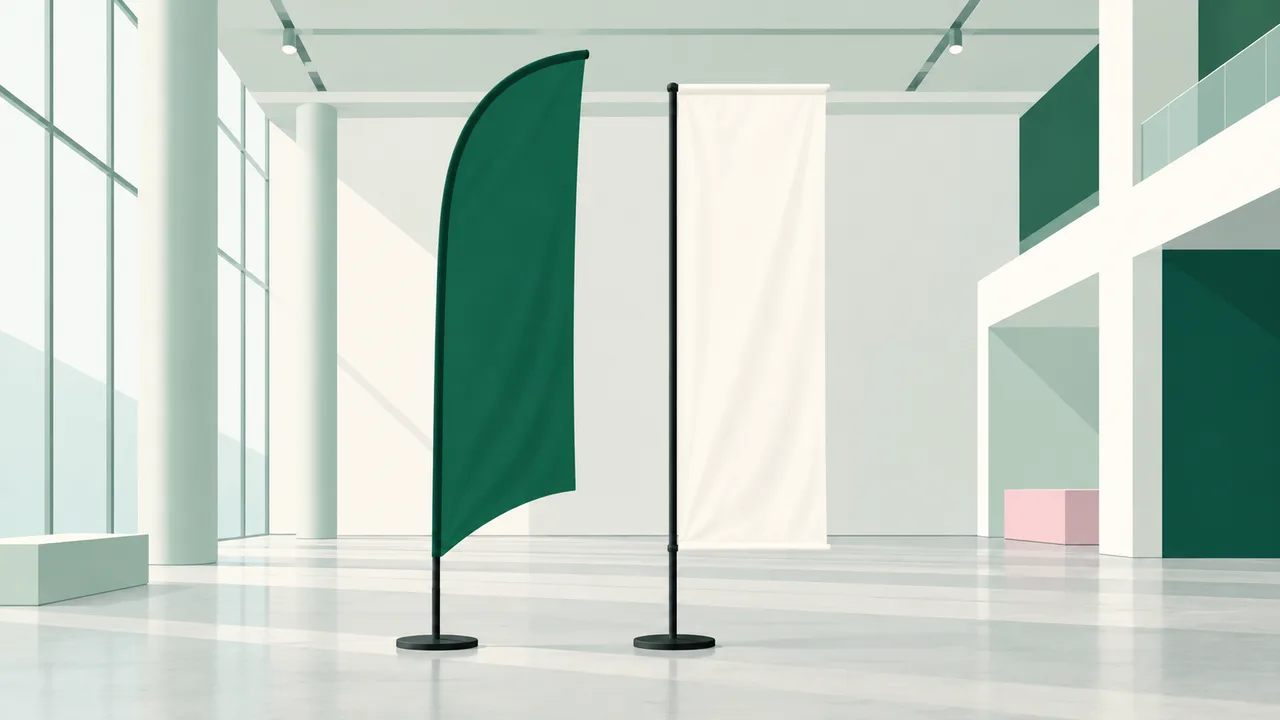
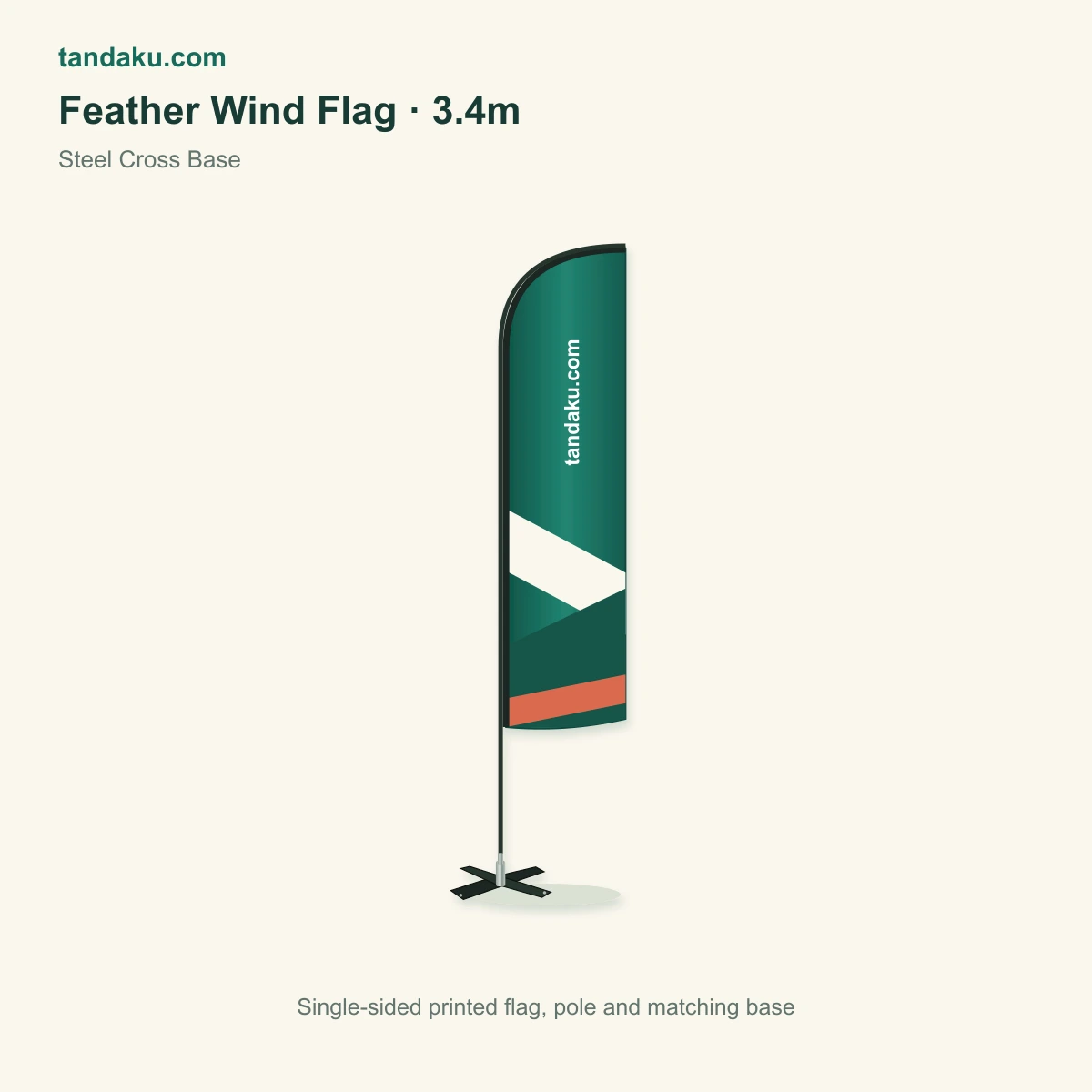
Choose the flag model before arranging the artwork. A feather flag has a shaped outline, while a rectangle gives the layout a rectangular fabric area. A design prepared for a rectangle may put wording too close to the shaped edge when moved onto a feather flag.
Start with what someone needs to recognise while walking past: the business name, the product or the purpose of the display. Give that message the clearest space. Small supporting details can go on a nearby menu, poster or counter display where people can stop to read them.
Keep the original logo proportions. Stretching a logo to fill a tall flag changes its appearance and often makes the lettering harder to recognise. Instead, adjust the surrounding space or arrange the message vertically without distorting the artwork.
For the differences between the available products, see the flag printing guide.
Should you use the fabric size or the assembled display size?
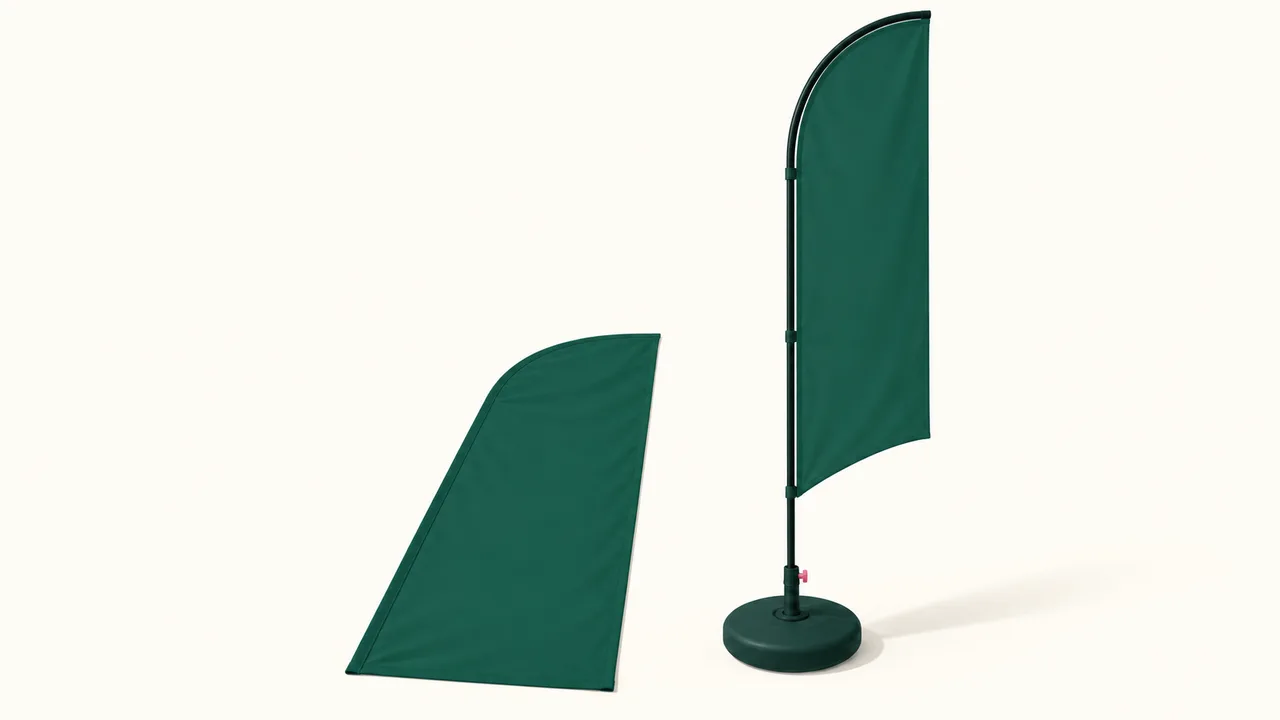
Use the fabric size for the artwork. Use the assembled display dimensions to judge whether the finished flag fits its intended position. They describe different parts of the same product.
The product name also needs care. For example, Feather Wind Flag 3.4m has a fabric size of 600 × 2400 mm and listed assembled display dimensions of 600 × 3200 mm. Do not turn the model name into an artwork measurement.
| Flag model | Fabric size, width × height | Assembled display, width × height |
|---|---|---|
| Feather Wind Flag 3.4m | 600 × 2400 mm | 600 × 3200 mm |
| Feather Wind Flag 5m | 700 × 3750 mm | 800 × 4700 mm |
| Rectangle Wind Flag 2.2m | 800 × 1600 mm | 800 × 2200 mm |
| Rectangle Wind Flag 3.3m | 800 × 2600 mm | 800 × 3300 mm |
Check the dimension image for the selected model on the wind flag ordering page. Keep width and height clearly labelled when passing the brief to a designer. A tall page with the wrong proportions can look convincing on screen while still being unsuitable for the selected flag.
Where should wording sit around the pole sleeve and edges?
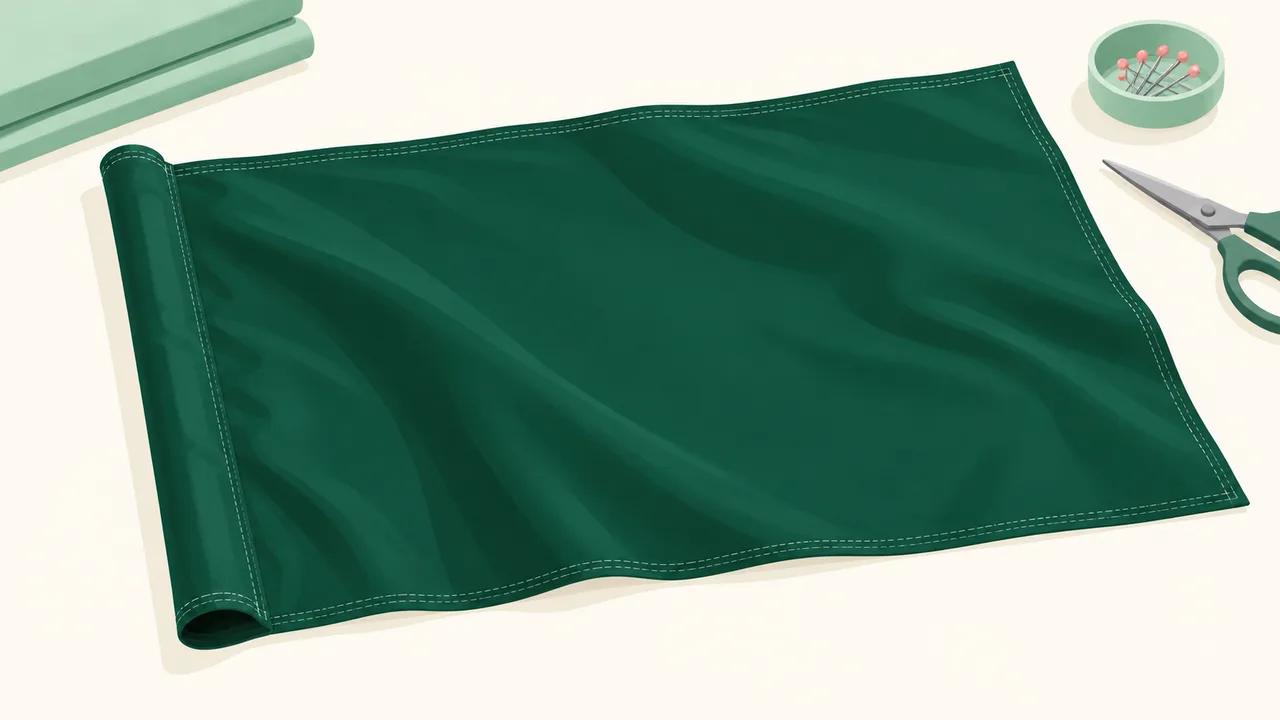
The listed feather and rectangle wind flags have a sewn pole sleeve. Treat that fitting as part of the design brief, rather than leaving it until the artwork is finished.
Keep important wording, logo details and borders away from the sleeve and the outer edge. Ask for the sleeve position and usable artwork area to be confirmed for your selected model before finalising the layout. A fabric measurement alone does not tell you where every letter can safely sit.
Avoid a tight border following the entire outline. It makes small differences around a shaped or sewn edge more noticeable. A background with room around the main message gives the layout more breathing space.
Check both the full outline and a close view of the wording. The full view shows whether the message fits the flag; the close view reveals spelling errors and small logo details. The large-format artwork guide covers general file preparation, alongside these flag-specific checks.
What will the design look like from the reverse?
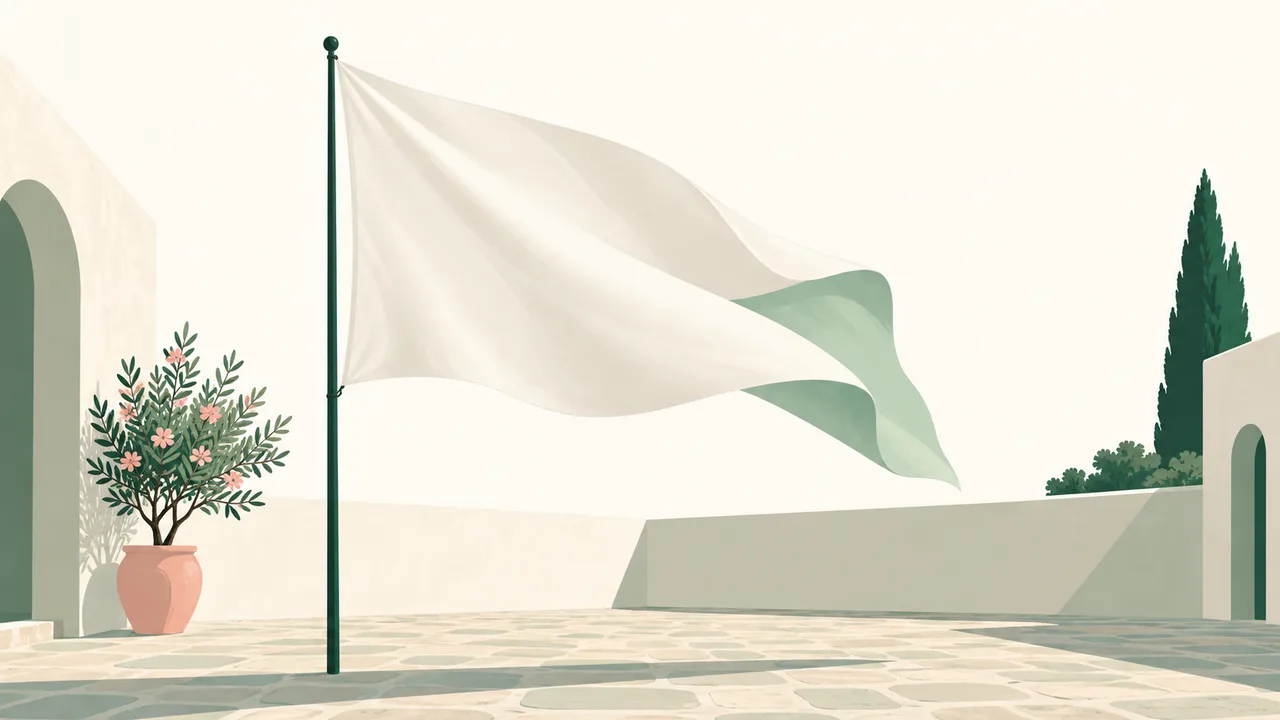
Tandaku's printed wind flags offer single-sided printing only. The design shows through the fabric on the reverse as a lighter, mirrored image. Text viewed from that side therefore reads backwards.
Decide which approach direction matters most at the display location. Position the main readable face towards that approach, while checking what people coming from the other direction will see. A flag beside an entrance may be viewed differently from one standing between walking routes.
Before approving the design, view a mirrored copy of the layout on screen. This helps you assess the reverse appearance, although it does not reproduce the fabric's colour or transparency. If readable text from opposing directions is essential, do not assume this single-sided flag meets that requirement. Consider a different display format.
A recognisable colour arrangement or simple symbol can still help people identify the display from behind. Keep detailed instructions somewhere readers can see them clearly.
Which fabric should you choose for your artwork?
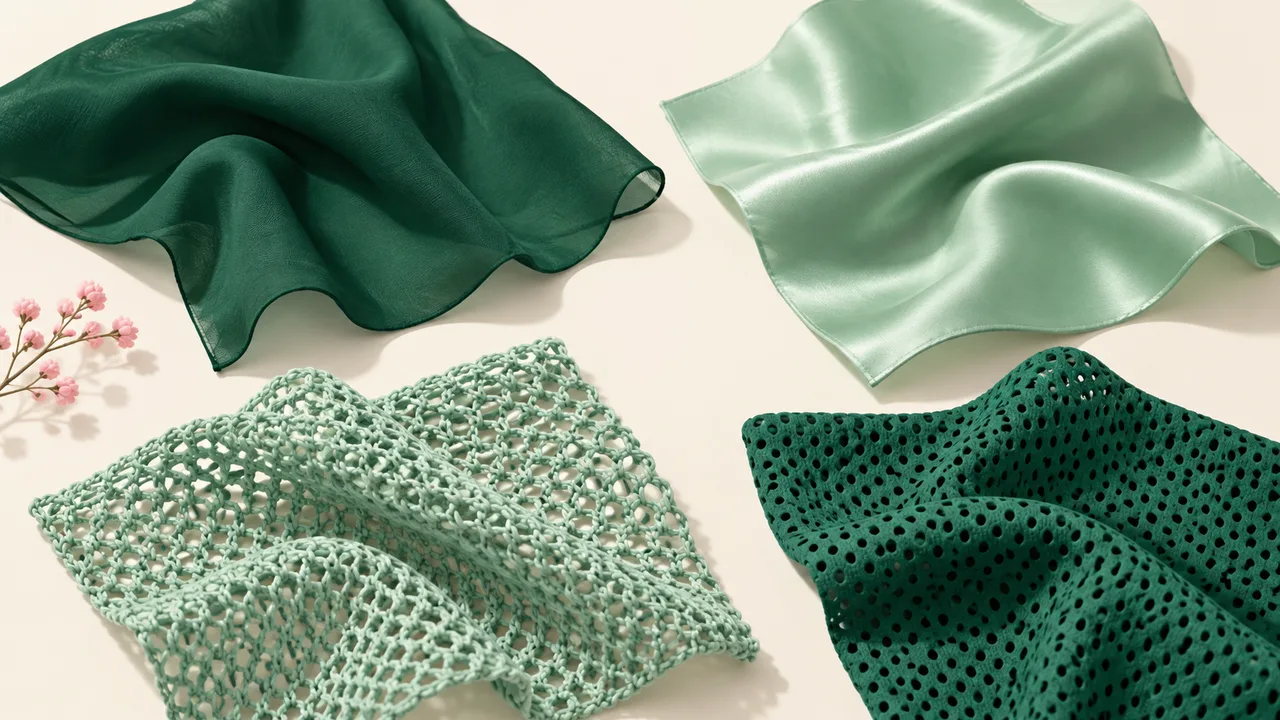
Printed wind flags offer Flag Fabric 80gsm, Mesh Fabric 110gsm, Satin Fabric 110gsm and Mesh Hole Fabric 120gsm. Choose with the display location and fabric appearance in mind. Changing fabric does not change the listed single-sided printing arrangement.
Flag Fabric is lightweight polyester flag cloth. Satin has a smooth surface and soft sheen. Mesh has an open knit that lets wind through, while Mesh Hole Fabric has a regular perforated pattern. These differences matter when deciding how much small detail to include.
Keep wording clear and avoid relying on delicate lines or a busy background for the main message. Check the artwork at a reduced screen view: if the message disappears as the layout gets smaller, simplify it before printing. This is a useful layout check, rather than a prediction of exact reading distance.
The fabric printing guide explains the fabric choices in more detail.
What should you check before ordering the print?
Confirm the model, fabric, artwork dimensions and package contents together. Printing with stand includes the printed flag, pole and base. Printing only includes the printed fabric without a pole or base. Stand only includes the pole and base without printed fabric.
If you already own a suitable stand, printing only can be the cheaper option. Feather Wind Flag 3.4m in Flag Fabric 80gsm is RM63.20 for printing only, while the same model and fabric with a steel cross base, pole and printing is RM151.20 per piece, before additional options and delivery. Choose the fabric-only option only after checking compatibility.
Compare the existing fabric's shape, dimensions and sleeve with the selected product. Matching a general height description does not establish that fabric from a different flag system will fit your pole.
Finally, check spelling, logo proportions, the readable face and the reverse appearance. Review the exact artwork intended for printing, so the file being ordered matches the layout you checked.
FAQ
How to print flag?
Choose the flag model and fabric, then prepare the design using its fabric dimensions and shape. Check the pole sleeve position and keep important wording clear of the edges. Tandaku's wind flags use single-sided sublimation printing, with a lighter, mirrored image visible on the reverse.
How to print a flag at home?
A home paper print can help you check spelling and the general arrangement of a design. It does not confirm how the artwork will look on flag fabric or whether the sewn sleeve will fit a pole. For a finished wind flag, prepare the file around the selected fabric shape and fitting requirements.
Where can I print a flag?
You can order printed wind flags through Tandaku's flag page, choosing printing with stand or printing only. Select the model and fabric before preparing the final artwork. Check the displayed dimensions and package contents so you order the parts you need.