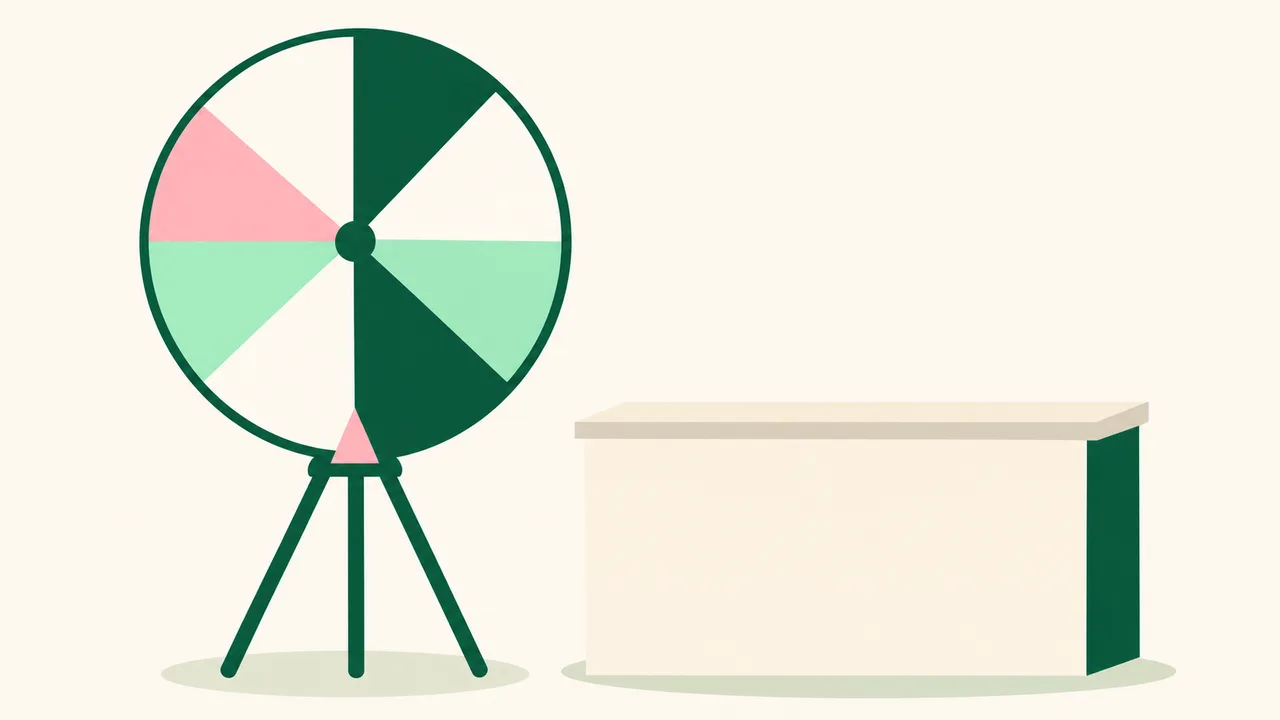
A clear lucky spin wheel design uses short prize labels, distinct segment boundaries and lettering that is easy to read where the arrow points. Choose the arrow position before laying out the artwork, and keep important wording away from the centre fitting and outer edge.
What should each prize segment say?
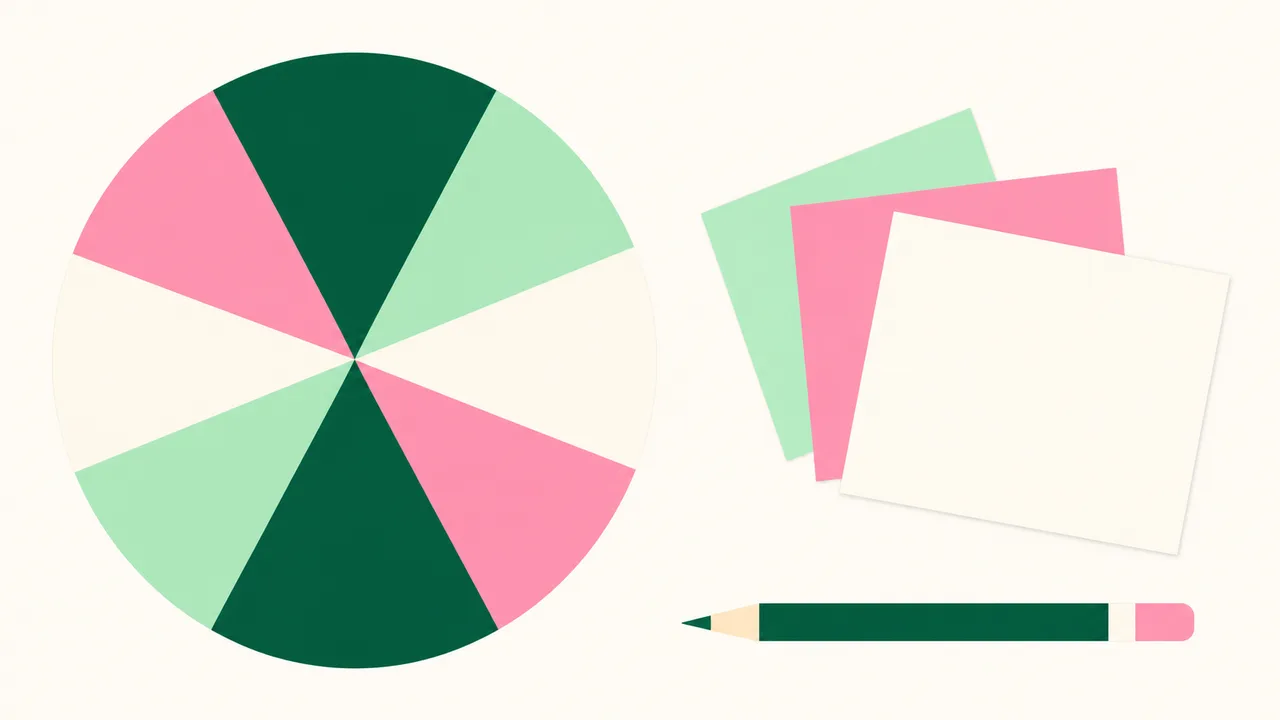
Start with the actual outcomes of your promotion. Write down what someone receives when the arrow stops on each segment, then use the shortest wording that still explains that outcome accurately.
A label such as “Small Gift” works only if your staff know which gift it means. A voucher label needs to match the offer you intend to honour. Avoid exciting wording that leaves the person running the booth to explain a different deal afterwards.
Keep eligibility conditions, redemption instructions and any purchase requirement on a separate notice beside the wheel. The wheel face should help someone recognise the result quickly; it should not carry the whole promotion brief.
If you repeat a prize across the wheel, use the same wording each time. Different names for the same outcome can make participants think they have won different things. Check the labels against your prize stock before you approve the artwork.
How should the labels line up with the arrow?
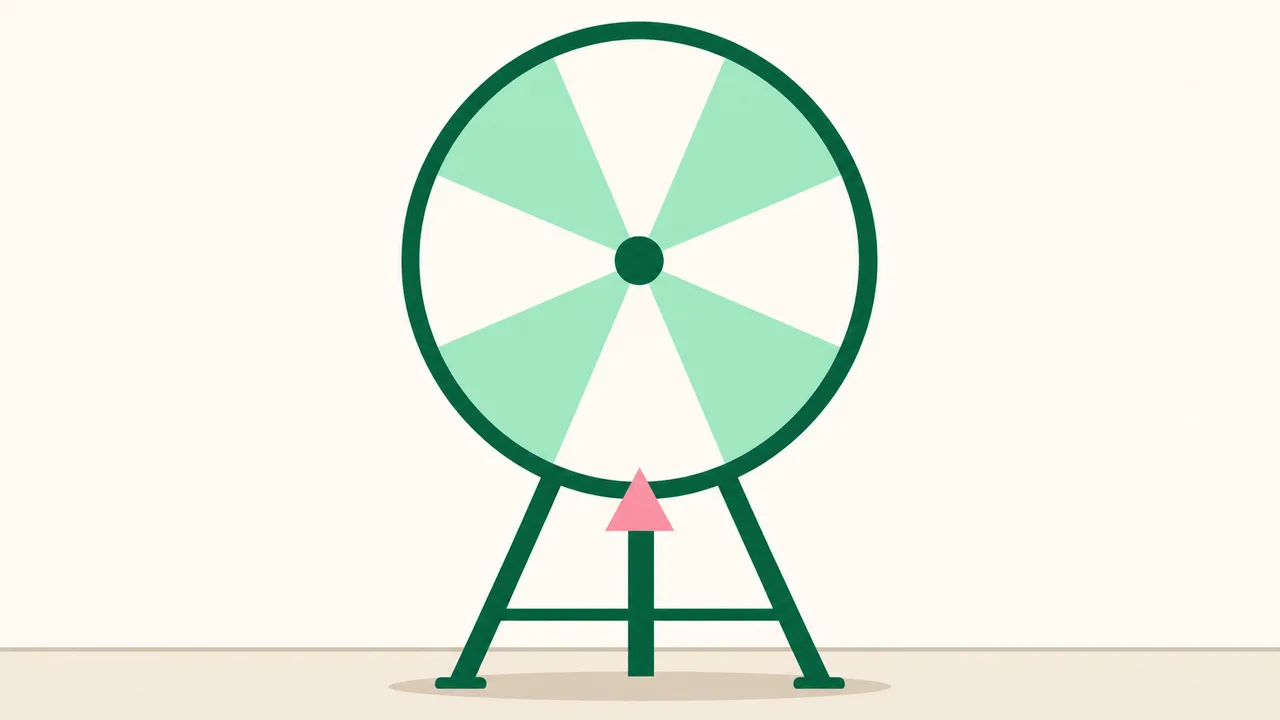
Choose the stand and arrow arrangement before deciding how to rotate the words. Tandaku offers a fixed arrow from the bottom that points upward, and a Premium centre-mounted arrow that can point in any direction. The position you choose affects where people look for the result.
Put each prize label clearly inside its own segment. Avoid placing the wording across a dividing line, where it becomes unclear which section owns the prize. Keep decorative shapes from looking like extra segment boundaries.
For a layout check, print a paper mock-up and mark the intended pointer position. Turn the mock-up through the different outcomes and look at the label nearest the pointer each time. This helps you catch awkward text angles before the design becomes a finished board.
Use the same text orientation rule throughout the wheel. A mixture of curved, sideways and horizontal labels can look lively on screen but make the result harder to follow. For choosing the hardware itself, see the lucky spin wheel sizes and stands guide.
Which colours and lettering are easiest to read?
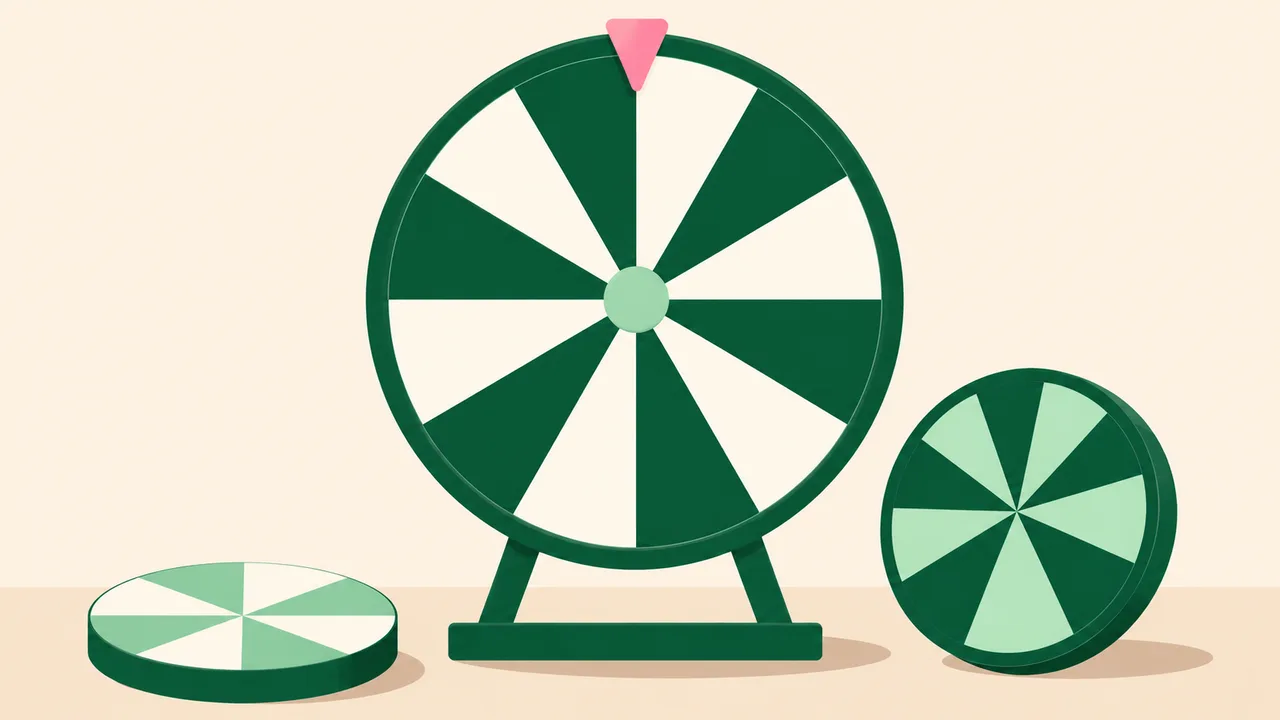
Give the words strong contrast against their background. Dark lettering on a pale segment or pale lettering on a dark segment is a useful starting point. Check every segment separately rather than assuming a text colour works across the whole wheel.
Use a plain, bold typeface for the prize labels. Thin strokes, elaborate script and heavy shadows can make a short label harder to recognise. Keep decorative lettering for a small supporting element if it competes with the results.
Colour should support the wording. If different prizes share a colour, their labels still need to make the distinction clear. If adjacent segments use similar shades, give their shared boundary enough contrast to remain visible.
Look at the artwork at its intended print size and from the place participants will stand. If you struggle to read it, shorten the label or simplify the layout before adding more decoration.
Screen colour is a preview, so avoid choosing almost identical shades as the only way to distinguish outcomes. The RGB and CMYK printing guide explains the difference between screen colour and printed colour.
What space should you leave around the centre and edge?
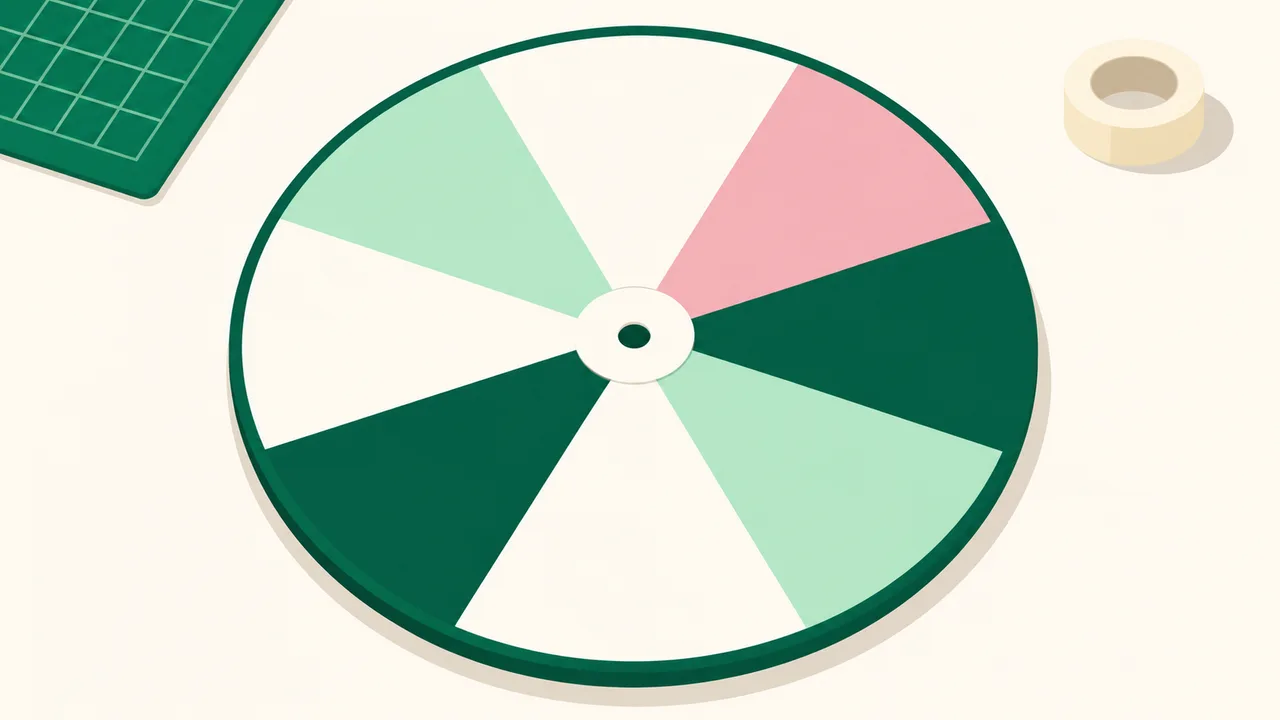
Treat the centre as a fitting area before treating it as a branding space. Keep prize names and important artwork clear of the mounting position. Check the fitting layout for the selected wheel rather than drawing a hole from guesswork.
The same care applies to the outside edge. Do not let the last letter of a prize label touch the circle outline. Give the wording room to sit comfortably inside the segment, with decorative backgrounds extending as required by the artwork specification.
A circular design can look balanced while still having text too close to the cut edge. Inspect the outer ends of long words and any curved lettering carefully. Shortening a phrase is usually cleaner than squeezing it into a narrow gap.
Keep a version of the artwork with editable text and shapes. It is easier to adjust wording, move a label or change the centre clearance from that file than from a flattened screenshot.
Can you reuse a stand with a new wheel design?
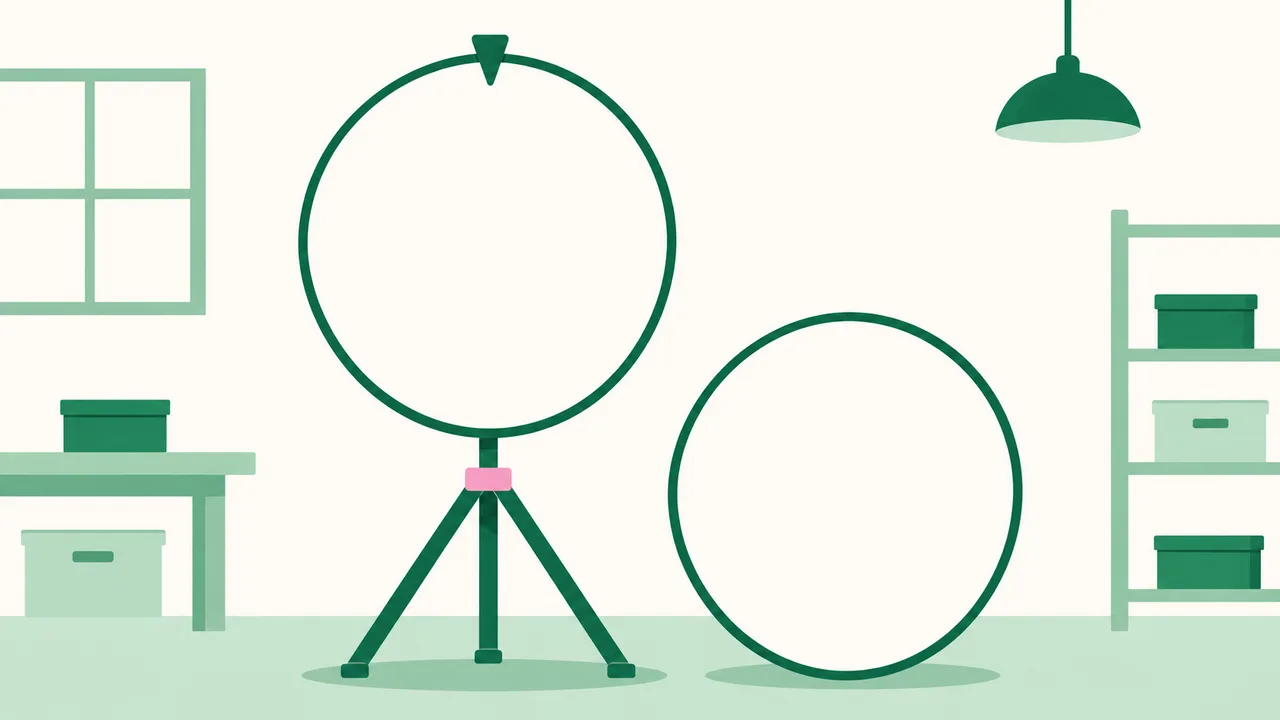
Yes, a replacement wheel is an option when your existing stand is suitable and the fitting matches. Tandaku’s printed wheels use 10mm PVC foamboard, and the product page offers a wheel only, a stand only, or a wheel with a stand.
| What you already have | What to consider ordering | What to check |
|---|---|---|
| A suitable stand and an outdated wheel design | Replacement printed wheel | Wheel size, mounting connection and arrow arrangement |
| A suitable printed wheel without its support | Stand only | Compatibility with the existing wheel and its fitting |
| No existing wheel or stand | Printed wheel with stand | Selected wheel size and arrow position |
Keeping a suitable stand can be enough when only the promotion artwork changes. Compare the replacement option before buying another complete setup. Do not assume that matching the wheel’s outside diameter also means the mounting connection will fit.
If you plan to reuse the wheel artwork for different events, keep temporary event wording on a separate notice. That can help you avoid reprinting a usable wheel just because the venue or promotion instructions change.
What should you check before sending artwork to print?
Read every prize label against your promotion brief. Check spelling, repeated outcomes and any conditions that appear on the separate notice. Ask the person running the activity to read the design too, so the printed result matches what they will explain at the booth.
Check that the artwork matches the wheel size you intend to order. Inspect the centre clearance, segment boundaries and text near the outer edge. A rectangular screenshot with a circle inside it is not enough to explain the intended finished wheel and fitting.
Use sharp artwork and keep text editable where possible. The large-format artwork preparation guide explains file preparation checks to make before submission.
On the lucky spin wheel order page, choose the required wheel or stand option and check the displayed price for that selection. Confirm what is included before paying, especially when choosing a replacement wheel or a stand without a printed board.
FAQ
What is lucky wheel?
For an event or shop promotion, a lucky wheel is a physical wheel divided into labelled outcomes. The pointer identifies the result when the wheel stops. Make the prize wording clear enough for participants and staff to read the same result.
How to lucky spin?
For a physical event wheel, display the participation rules and explain how the pointer identifies the outcome before someone takes a turn. Test the assembled wheel and check that its labels are readable at the chosen pointer position. Keep the prize list beside the activity so staff can match the result to the correct item.
How do I make a lucky spin wheel design?
Choose your arrow arrangement, prepare the prize list and place each short label inside its segment. Check contrast, centre clearance and edge spacing at the intended print size. Confirm the wheel dimensions and fitting before sending the artwork for printing.